
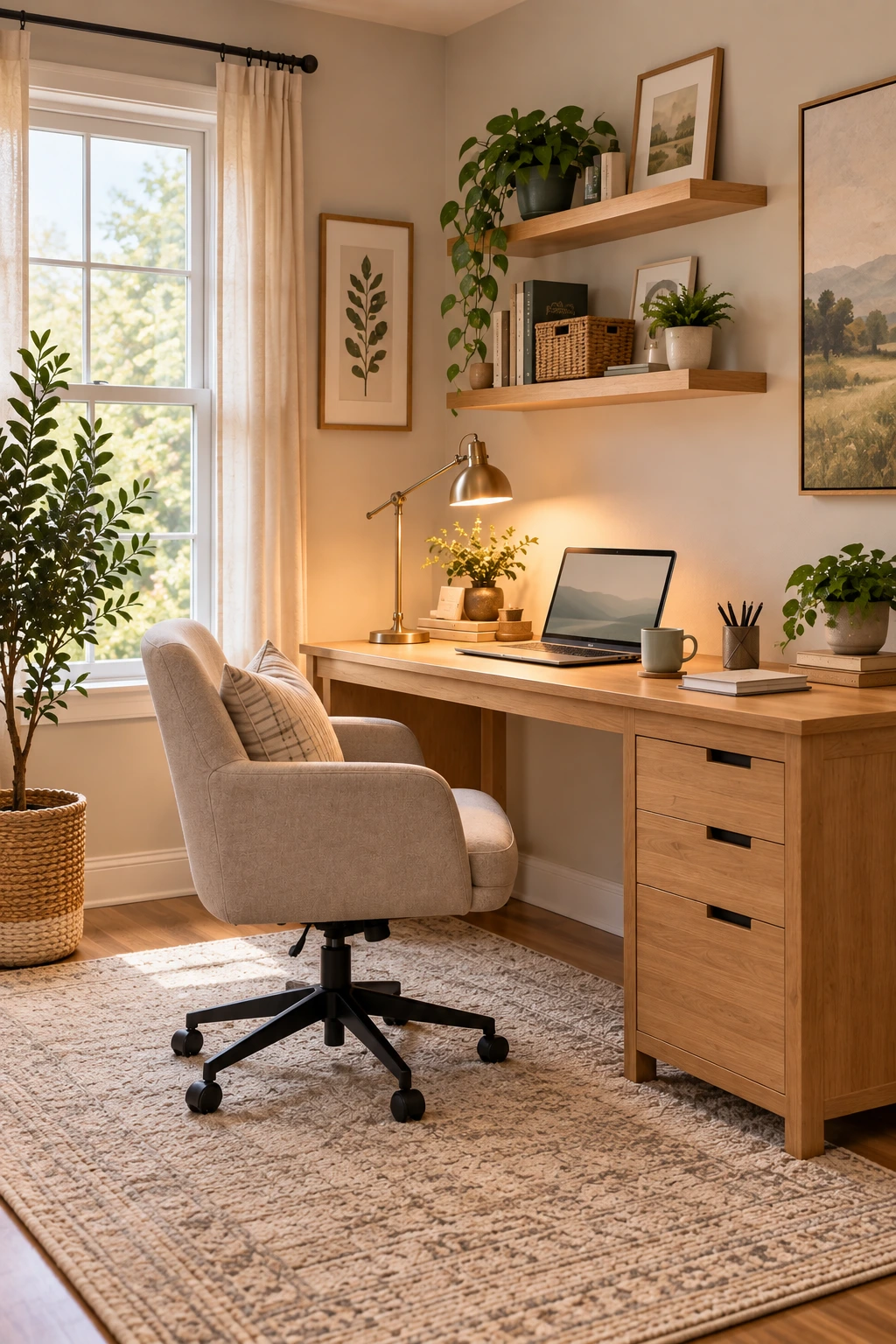
Cozy home office ideas don’t have to feel cold, formal, or completely separate from the rest of your home.With a few thoughtful changes, even a simple desk in a spare room, bedroom corner, or living room can feel warm, comfortable, and inviting.
The best cozy home office ideas aren’t about filling the room with decorations. They are about creating a workspace that feels good to use while still giving you enough room to work, organize your things, and move around comfortably.
Start with what you already have. Look at the layout, lighting, desk, chair, storage, and the things that make the room feel unfinished or cluttered. Then improve those problem areas one at a time.
You don’t need a complete makeover. Sometimes a better desk position, warmer lighting, a rug, or a little more storage can change the entire feel of the room.
This guide walks through practical ways to create a home office that feels cozy, organized, and easy to live with.
Affiliate Disclosure: This post may contain affiliate links. This means I may earn a small commission at no extra cost to you if you purchase through my links. I only recommend products that align with a cozy, minimalist, and functional home aesthetic.
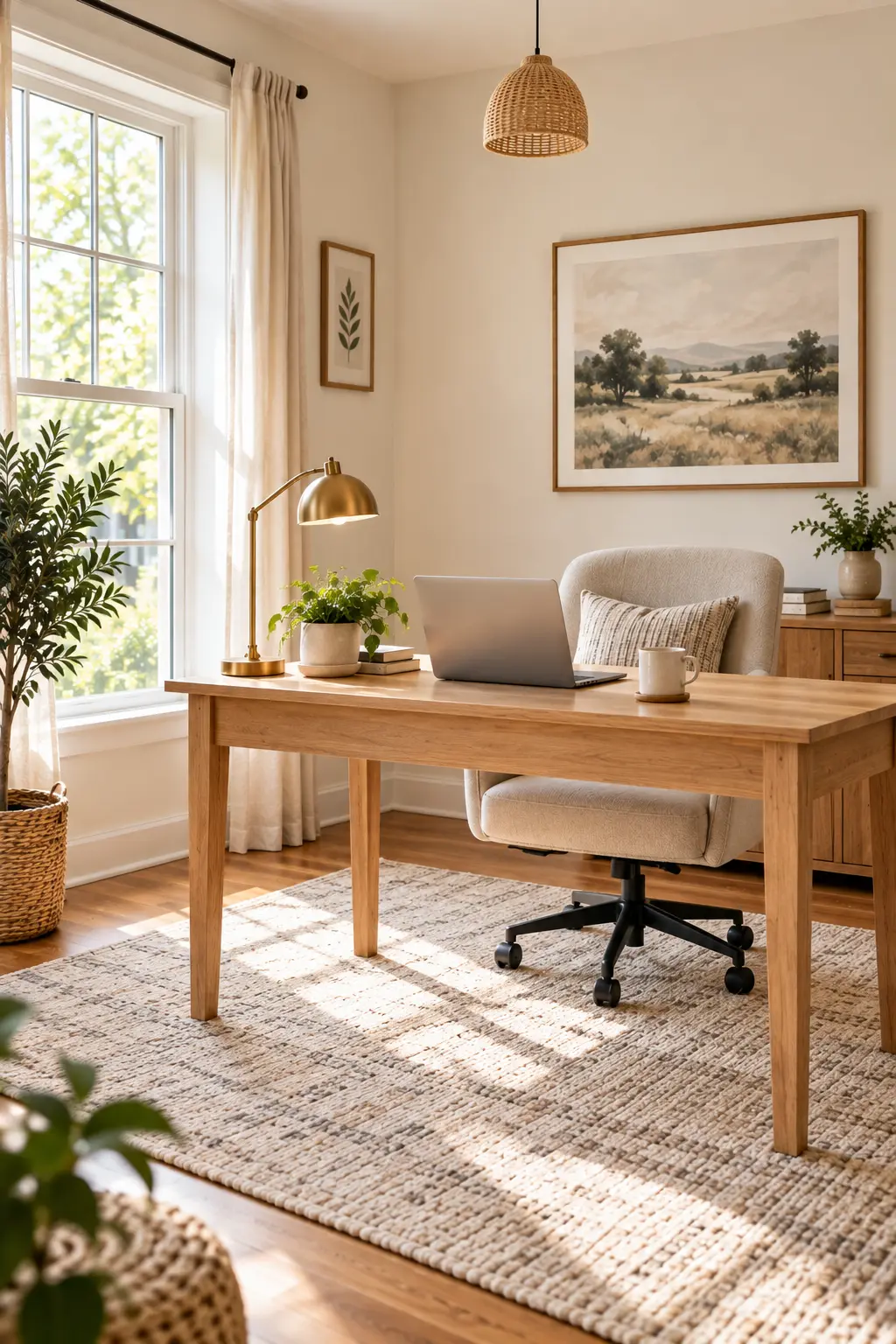
Before You Decorate: Figure Out What Isn’t Working
Before shopping for anything, spend a few minutes figuring out why your office doesn’t feel right.
This step is easy to skip when planning cozy home office ideas because decorating is more exciting than measuring, rearranging, or clearing clutter. But it can save you money and prevent the room from becoming overloaded with things you don’t really need.
Measure the area where the desk will go. Pay attention to windows, doors, outlets, heating or cooling vents, and the amount of space you’ll need to move around the room. A desk might look perfect online but feel oversized once it’s sitting between a wall and a doorway.
Think about how you actually use the space, too.
Do you work from a laptop most of the time? If so, consider how much room you need for two monitors, notebooks, or paperwork. Also think about whether you regularly switch between work and another activity. Your answers should influence the size and shape of the desk.
Natural light matters as well. A window can make a small office feel brighter and more pleasant, but you don’t want your desk positioned so that sunlight creates glare on your screen.
Start with function. Decor should come after that.
Once the basic layout works, you’ll have a much easier time making the office feel warm and finished.
Start With the Layout: Desk, Chair and Space
When planning cozy home office ideas, the space still needs to work as an office.
Start with the desk because it usually determines how the rest of the room will function.
Choose a desk for cozy home office ideas
A larger desk isn’t automatically better when planning cozy home office ideas.
If you have a dedicated office, you may have room for a generous work surface. In a bedroom or apartment, a compact desk may be a better choice because it leaves space for everything else.
Before buying, measure the available area and think about what you actually need on the desk.
A laptop user may need much less space than someone using two monitors, a keyboard, speakers, notebooks, and other equipment.
Think about desk placement
A desk near a window can take advantage of natural light, but direct sunlight can create glare on a screen.
A desk facing a wall can make a small room feel efficient. Placing it perpendicular to a window can sometimes give you useful daylight without putting the screen directly in front of it.
There isn’t one universal layout that works for every room.
The best position is the one that gives you enough workspace, comfortable movement, access to outlets, and a setup that makes sense for how you work.
Give the chair enough room
Don’t forget the space behind the chair.
A desk might technically fit against a wall, but if you can’t comfortably pull the chair out or walk behind it, the room will feel cramped.
That extra bit of breathing room can make a small office feel much more comfortable.
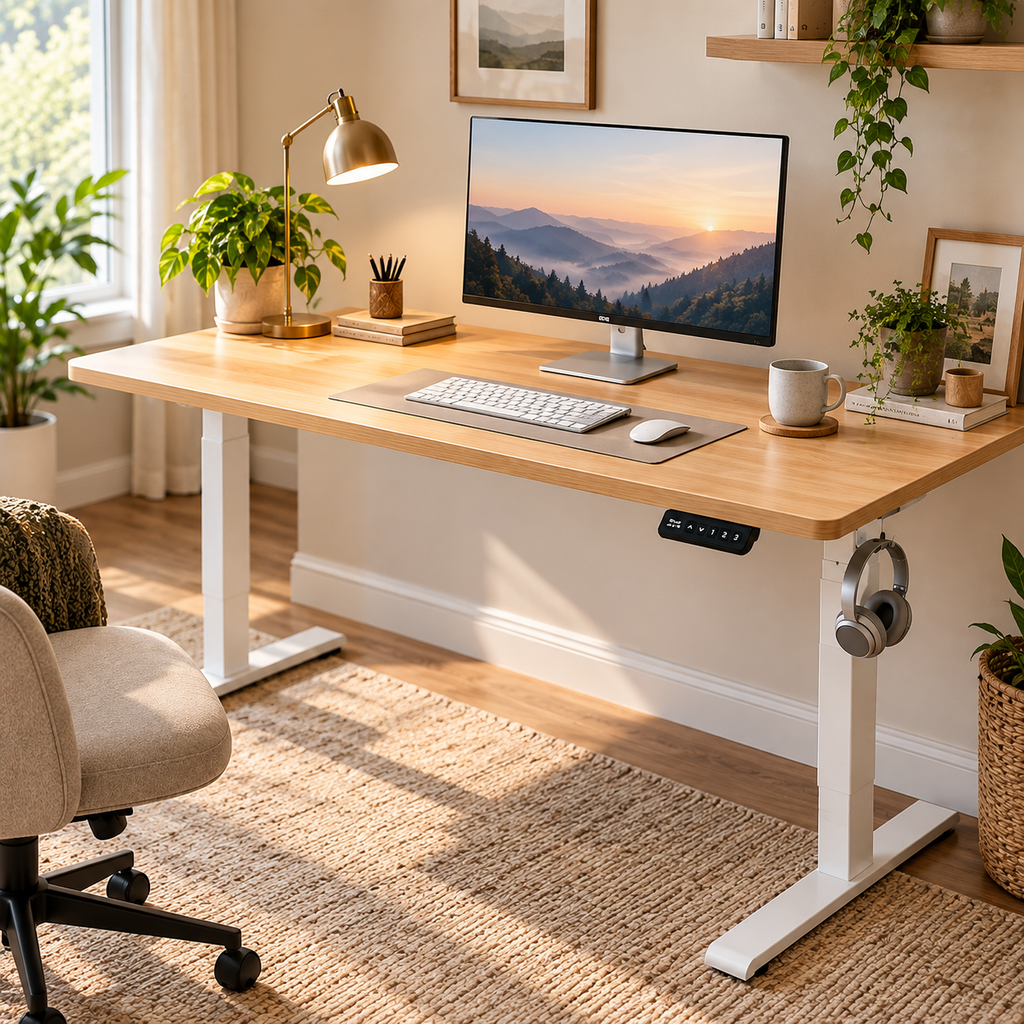
FEZIBO 48 × 24-Inch Electric Standing Desk
Need more flexibility from your home office desk?
A larger workspace can make a home office feel less cramped, while an electric height-adjustable design gives you more flexibility throughout the day. This FEZIBO desk has a 48 × 24-inch desktop, electric height adjustment, and 3 customizable memory presets, giving you a practical setup for a laptop, monitor, keyboard, and everyday work essentials.
Make Comfort a Priority in Your Cozy Home Office
Comfort is one of the easiest things to overlook when you’re focused on how a room looks.
A chair may look beautiful in a photograph, but that doesn’t make it a good choice for your everyday workspace. Choose something that suits the amount of time you actually spend at the desk and fits the scale of the room.
Then soften the space around it.
A rug can make a hard floor feel warmer. A cushion can add a little color. A soft throw can make an occasional reading chair feel more inviting.
The key is moderation.
You don’t need a stack of pillows and a blanket draped over every chair to create a cozy feeling. A few soft elements are enough.
In a larger office, a small accent chair can also create a second zone for reading, taking a break, or stepping away from the desk.
In a small office, skip the extra furniture and focus on making the main chair and work area comfortable.
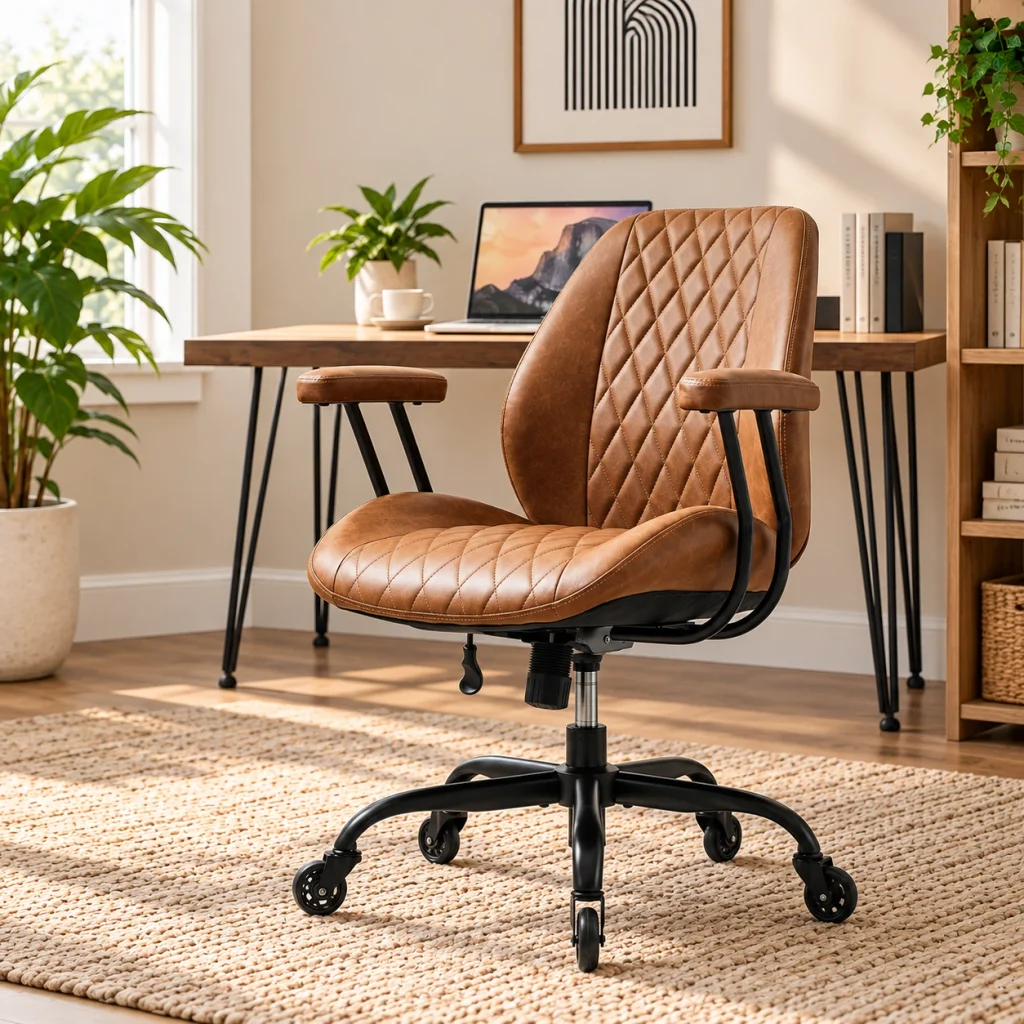
Cozy Brown Office Chair for a Warm Home Workspace
The brown quilted finish blends easily with wood desks and warm neutral decor, while adjustable height, padded armrests, and a rolling swivel base make it practical for everyday use.
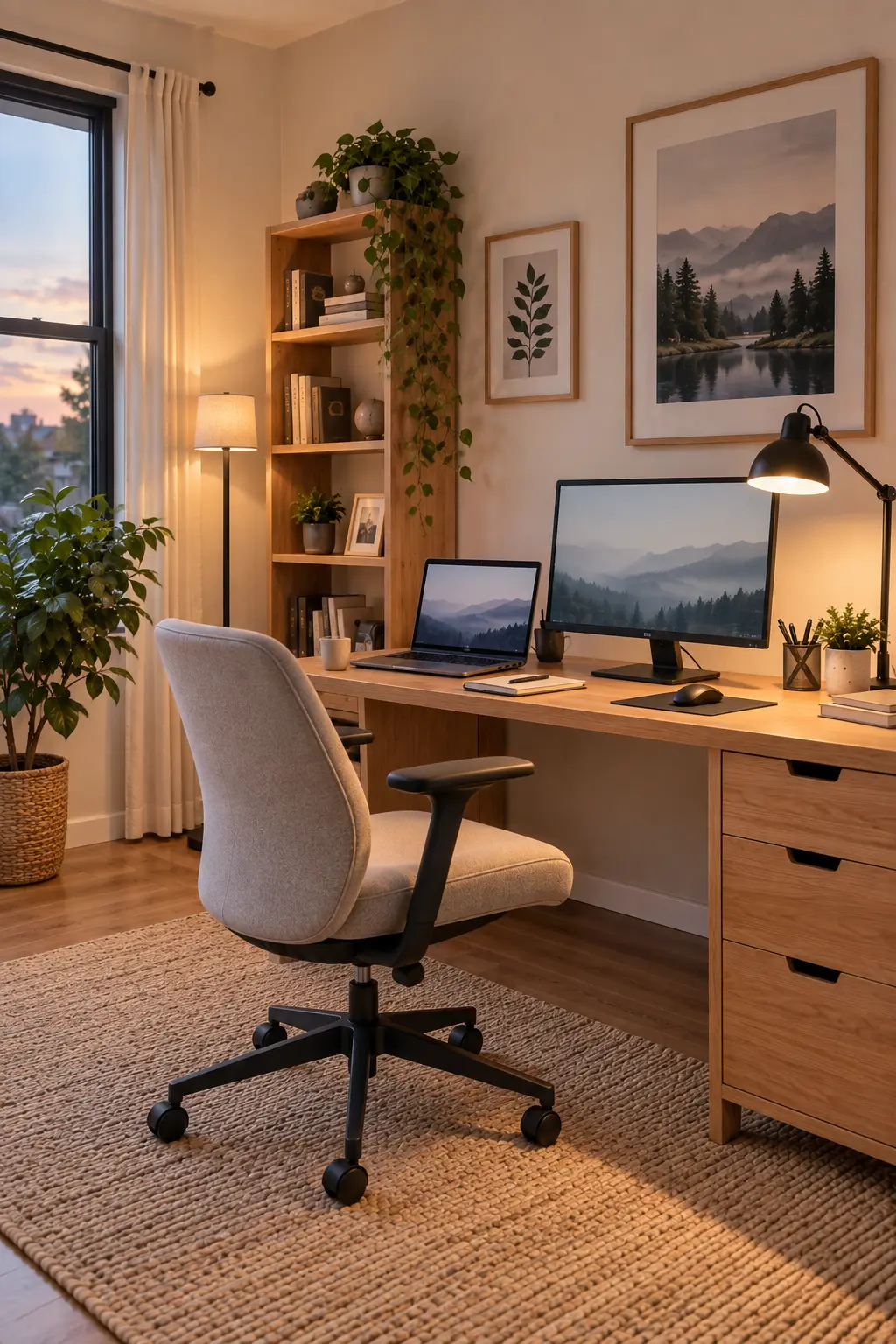
Use Lighting to Make the Office Feel Warmer
Lighting is one of the fastest ways to change the mood of a room.
A single bright ceiling fixture can make even a nicely decorated office feel harsh. Instead, think about lighting in layers.
Start with natural light
Use daylight when possible, but pay attention to screen glare.
If the sun hits your monitor directly during part of the day, adjusting the desk position or using a simple window treatment may make the space more comfortable.
Add task lighting
A desk lamp gives you focused light where you actually need it.
Choose a lamp that can be positioned easily and fits the size of your desk. A very large lamp can overwhelm a compact workspace, while an extremely small one may not provide the coverage you need.
Add softer ambient light
A floor lamp, wall light, or small accent lamp can add a warmer glow when you’re working in the evening.
This also makes the room feel less like a brightly lit work zone once the main overhead light is turned off.
Warm lighting works particularly well with wood, beige, cream, brown, and other warm neutral materials.
Pay attention to glare, too. A beautiful lamp isn’t helpful if it shines directly onto your monitor or creates reflections on your screen.
The goal is simple: use brighter, focused light when you need to work and softer light when you want the room to feel relaxed.
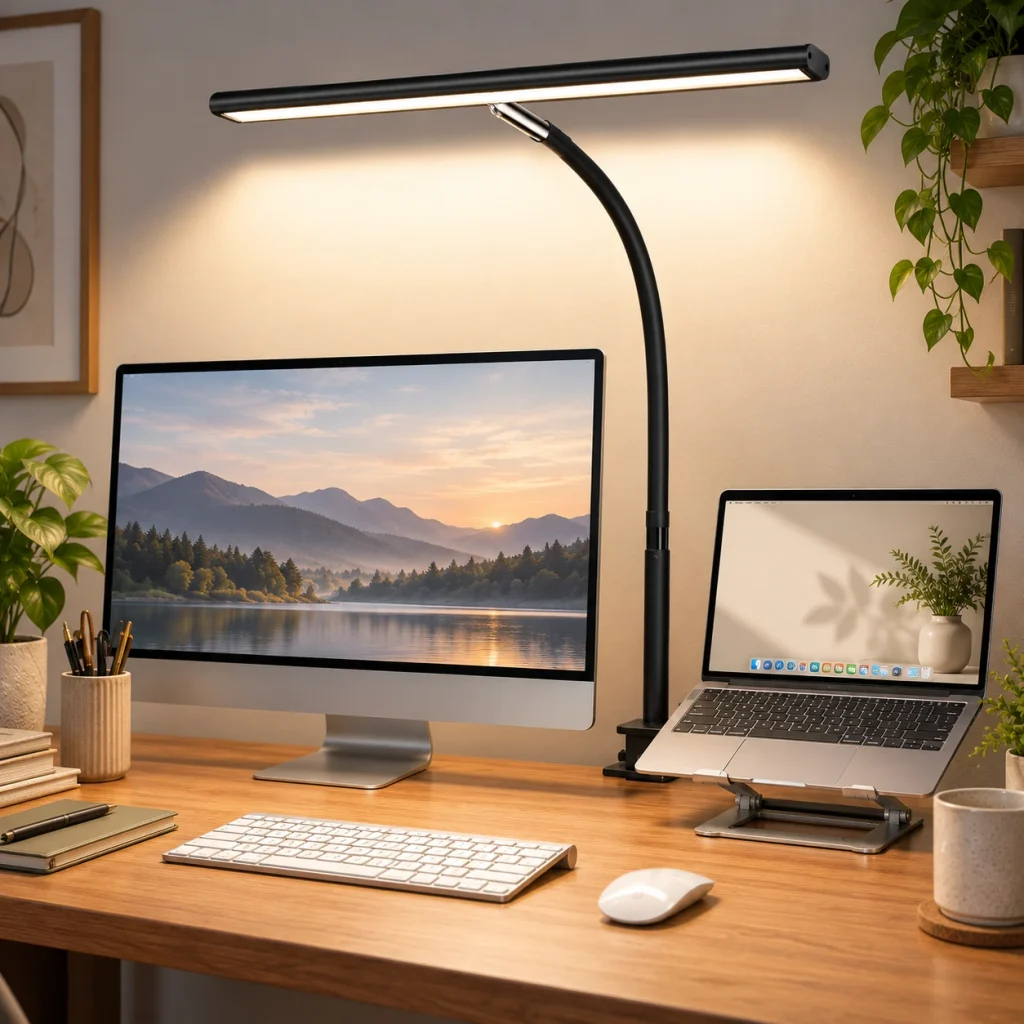
Save Desk Space With a Flexible Clamp Lamp
Airlon 17″ LED Desk Lamp
Need better desk lighting without giving up valuable workspace? This clamp-on lamp attaches to the desk edge and provides adjustable light for your monitor, laptop, or work surface.
Why you might like it:
- Clamp design keeps the desk surface clear
- 2700K–6500K adjustable color temperature
- 360° flexible gooseneck
- Fits monitors up to 30″
- 100 LEDs with flicker-free lighting listed
Cozy Home Office Ideas: Add Warmth With Color, Wood and Texture
Color has a huge impact on how an office feels.
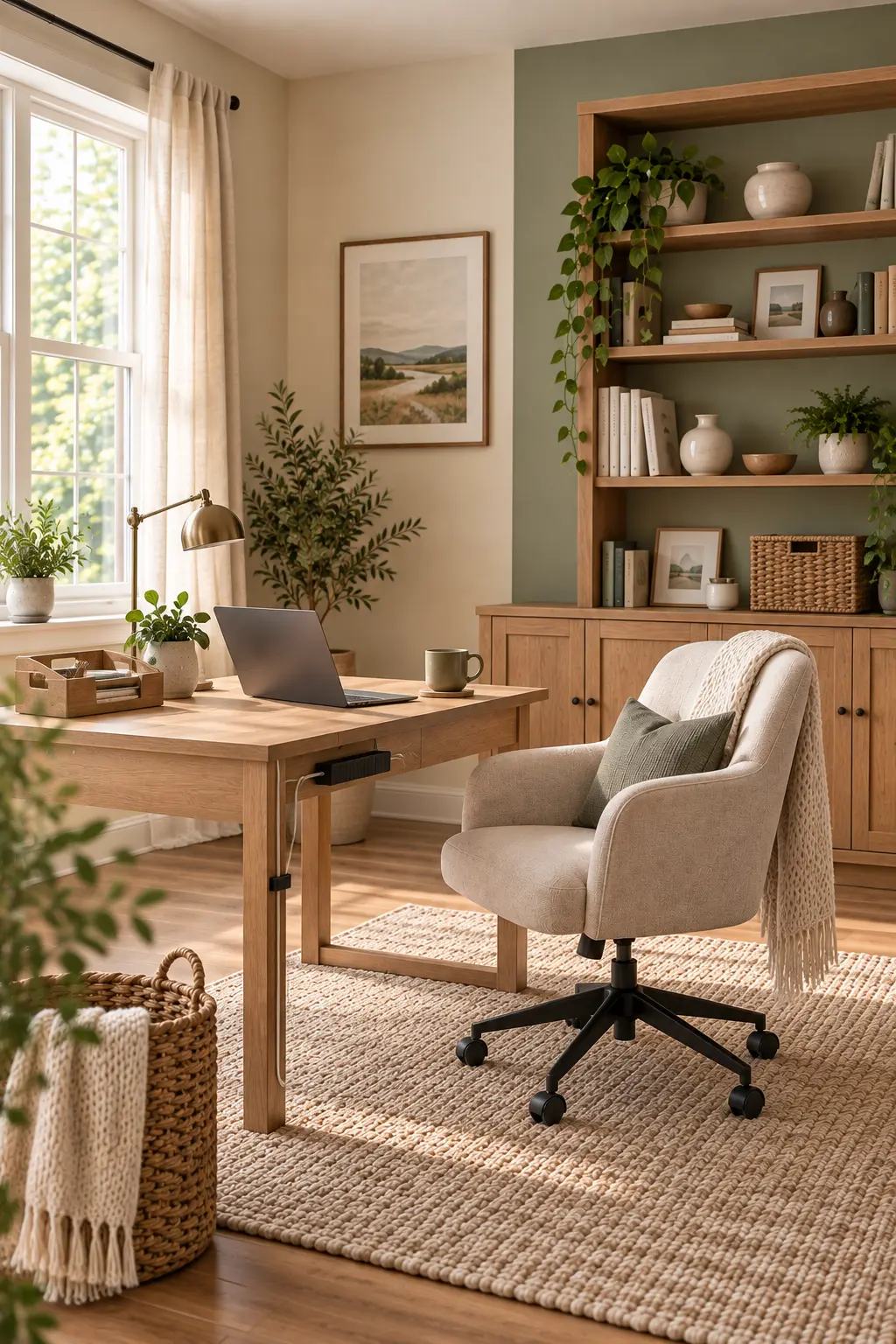
You don’t need dramatic paint or a complicated color scheme. A few warm, restrained tones can make the room feel much more comfortable.
Start with a simple palette
Try combinations such as:
- warm white and light wood
- cream and beige
- soft taupe and warm gray
- muted sage and natural oak
- dusty blue and warm white
- soft brown and cream
A simple formula works well: choose one main neutral, one supporting color, and one or two smaller accents.
For example, warm white walls could work with light wood furniture, a muted green plant pot, and a soft beige rug.
Bring in natural wood
Wood adds warmth without demanding much attention.
You can use it through:
- a desk
- floating shelves
- picture frames
- a side table
- storage boxes
- trays
- small decorative pieces
You don’t need several large wooden furniture pieces. One or two natural wood elements can be enough to break up a room filled with screens, metal, and other hard surfaces.
Add texture
Texture keeps neutral spaces from feeling flat.
A rug, woven basket, linen curtain, upholstered chair, or textured cushion can make the room feel softer without adding another strong color.
The important part is variety.
A room can feel rich and layered with only a few different materials. You don’t need every object to have a different texture.
Make the Desk Cozy Without Making It Cluttered
Your desk is probably the most visible part of the office, which makes it tempting to decorate it heavily.
Try not to.
A cozy desk should still be easy to work at.
Keep frequently used items within reach, but avoid covering your entire work surface with decorative objects.
Create one small styling zone
A tray can hold a few smaller items together instead of letting them spread across the desk.
For example, you might keep a pen cup, small notebook, hand cream, or a simple decorative object in one area.
Add one piece of natural greenery
A small plant can soften the desk without taking up much room.
If you don’t have enough natural light for a live plant, a small artificial plant can provide a similar visual effect.
Leave some empty space
This is important.
Your desk doesn’t need to look unfinished just because part of it is empty.
That open space makes it easier to work and prevents the room from feeling visually crowded.
Keep decorative objects away from your main work area
A framed photo or small sculpture may look great at the end of the desk or on a shelf, but you don’t need several objects sitting directly beside your keyboard.
A little restraint goes a long way.
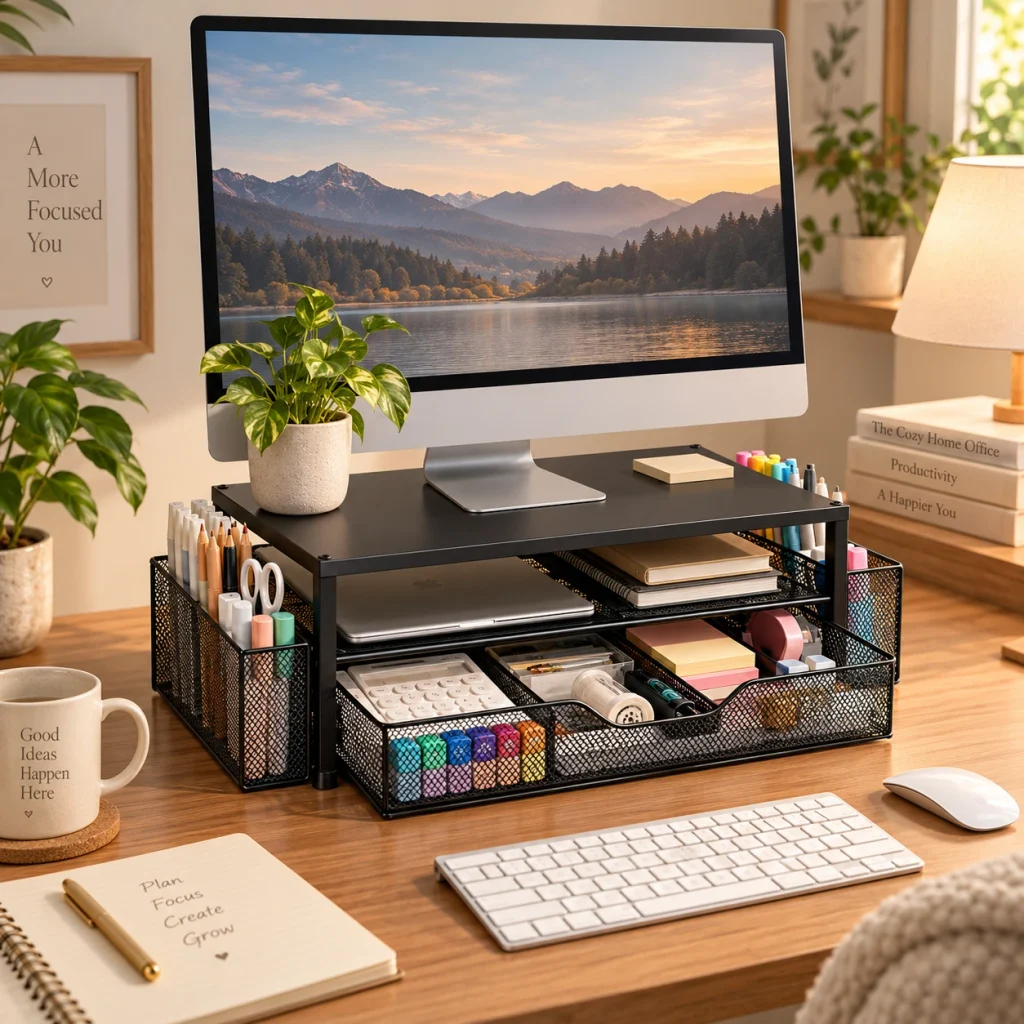
Clear Your Desk Without Losing Storage
OPNICE 2-Tier Monitor Stand with Drawer & 2 Pen Holders
Turn unused space around your monitor into useful storage. The two-tier design adds room for office essentials while the drawer and pen holders help keep small items organized.
Why you might like it:
- 2-tier storage
- Built-in drawer
- 2 pen holders
- Raises the monitor
- Keeps the desk surface more organized
Use Storage to Keep Cozy From Becoming Cluttered
Organization is part of the design.
A room can have beautiful colors, plants, artwork, and comfortable furniture, but if every surface is covered with supplies, it won’t feel calm.
Start by separating your belongings into two groups:
Things you use every day and things you only need occasionally.
Everyday items should be easy to reach. Less-used supplies can go into drawers, baskets, cabinets, or boxes.
Use vertical space
When floor space is limited, look at your walls.
Floating shelves can hold books, artwork, plants, and a few decorative pieces without taking up valuable floor space.
Tall storage can also make better use of a narrow area than a wide cabinet.
Keep open shelves selective
Open shelving works best when it contains a mix of useful and decorative items.
Try books, a small plant, one framed piece, and a practical storage box rather than filling the entire shelf.
Don’t forget your cables
A clean desk can still look messy when cords are hanging everywhere.
Group chargers, route cables neatly, and keep only the cords you actually need in the visible workspace.
You don’t need an elaborate cable-management setup. Even a few simple changes can make a noticeable difference.
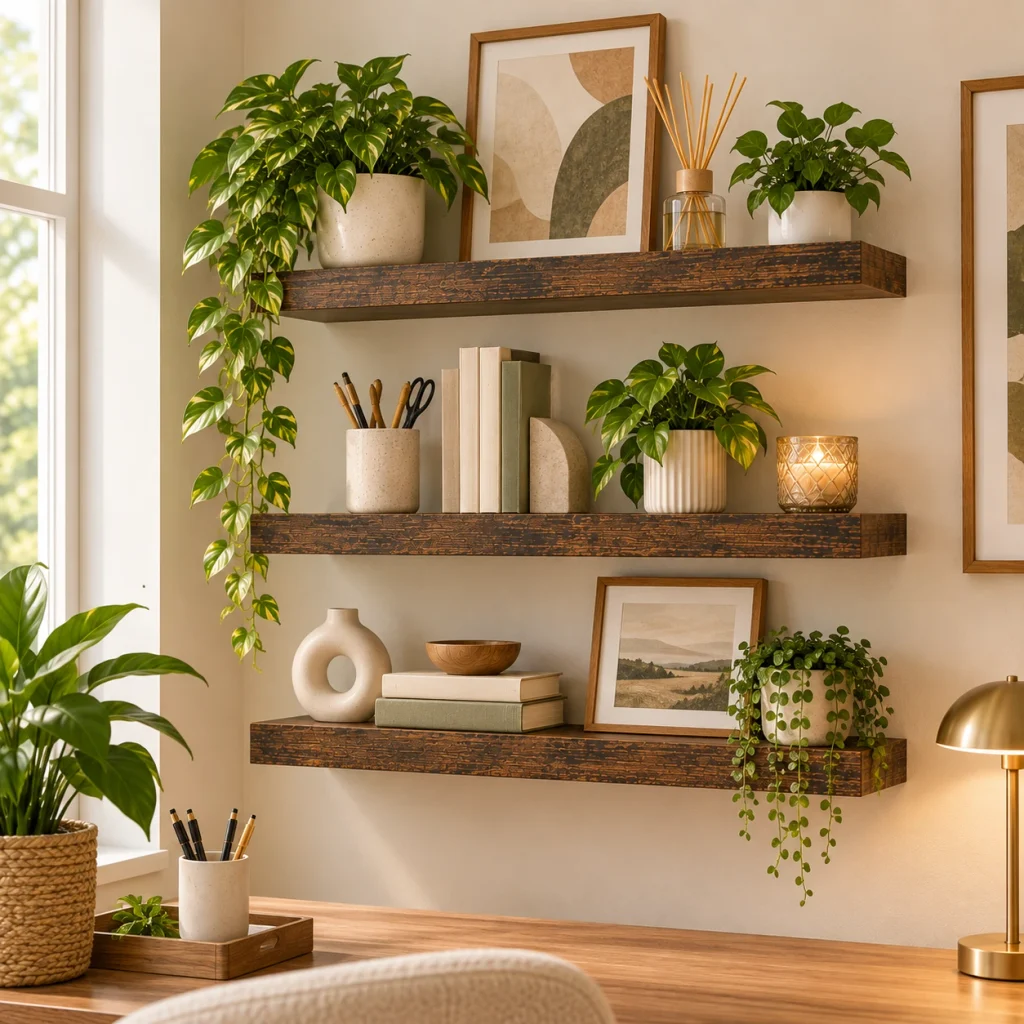
Turn Empty Wall Space Into Useful Storage
BAYKA 15.7-Inch Floating Shelves — Set of 3
Make better use of vertical space without adding bulky furniture. These rustic wood-look floating shelves give you room for books, plants, artwork, and small office essentials while keeping the desk and floor more open.
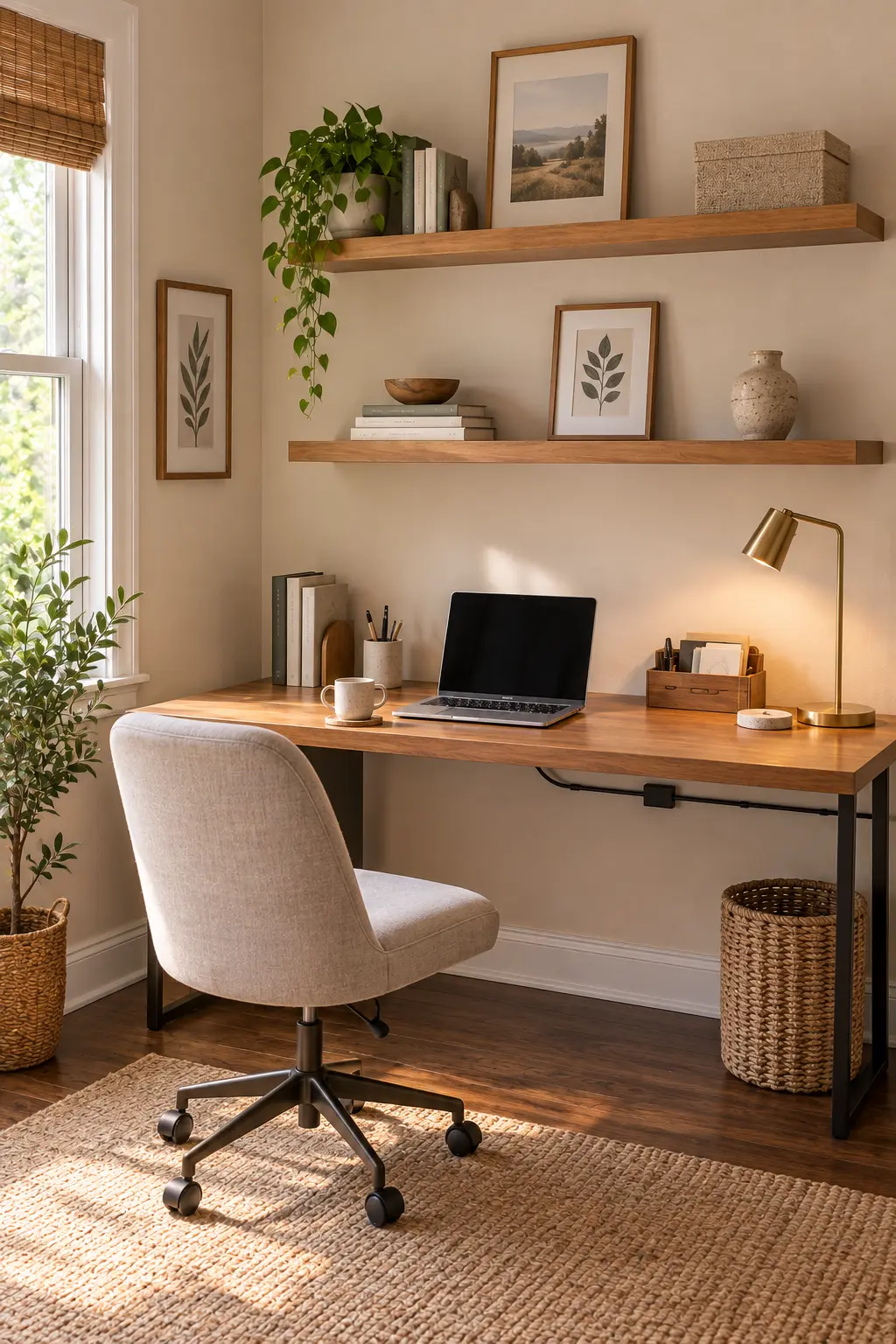
Decorate the Walls Without Making the Office Feel Busy
Walls are a great opportunity to add personality without taking up floor space.
A few framed prints can make a plain office feel finished. Your artwork doesn’t have to follow a particular trend. Choose pieces that work with the colors and mood of the room.
You can use:
- botanical prints
- simple abstract artwork
- landscapes
- photography
- personal photographs
- vintage-style prints
Floating shelves can also combine storage and decoration.
A small shelf can hold books, a plant, and one or two meaningful objects while keeping the desk clear.
A pinboard or inspiration board makes sense when you genuinely use it. It can hold notes, reminders, sketches, or ideas without becoming another decorative surface that needs constant attention.
Most importantly, don’t feel pressured to cover every inch of wall.
Empty space gives the eye somewhere to rest.
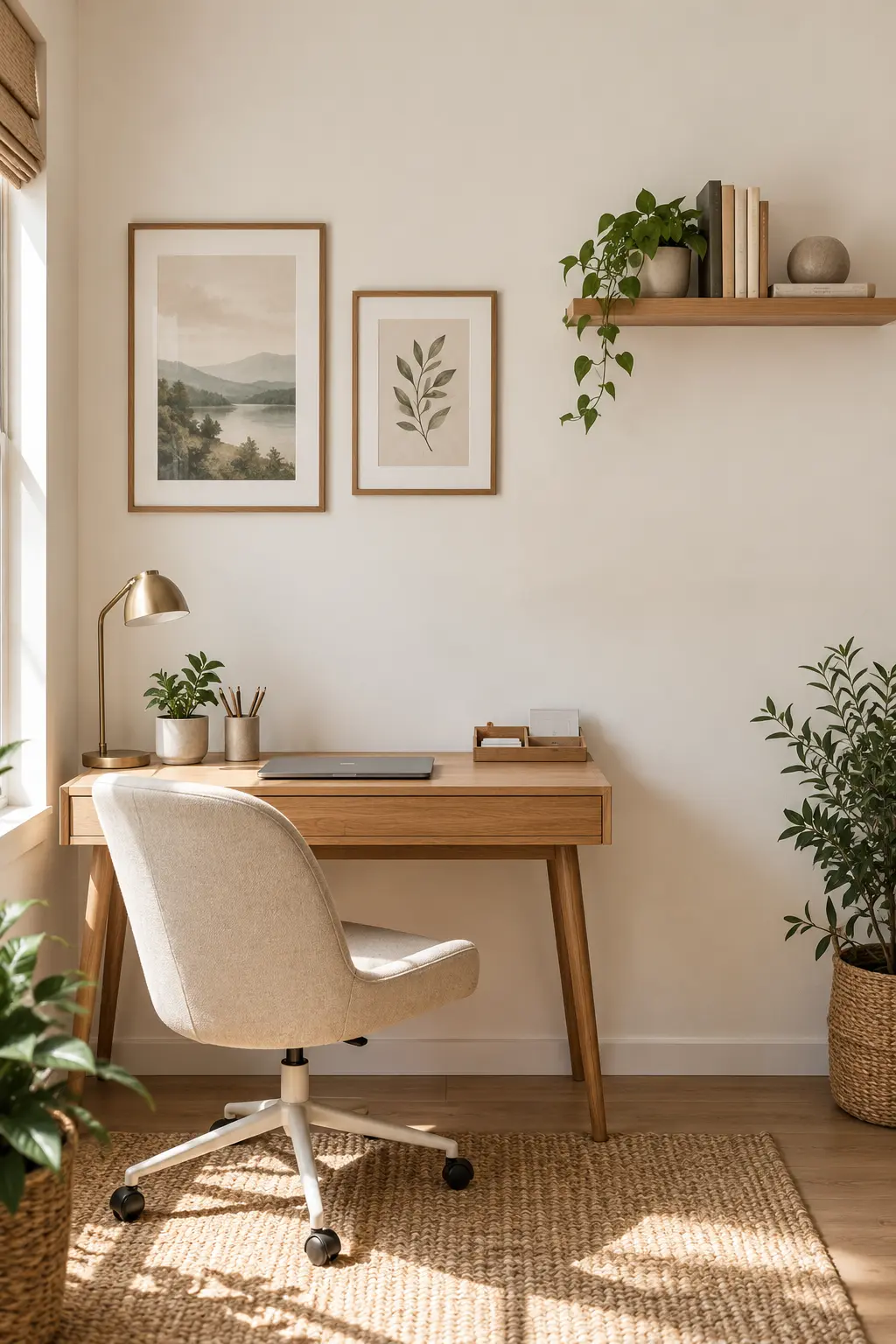
Add Plants, Artwork and Personal Details
This is where the office starts to feel like part of your home.
Maybe you keep a few books you enjoy. Perhaps there is a framed travel photo, a piece of artwork you found locally, or an object connected to a hobby.
Those details can make the room feel more personal than a collection of matching office accessories ever could.
Plants work well here, too.
One medium-sized plant in an empty corner can create a stronger visual effect than several tiny plants spread around the room.
You can also use natural materials such as woven baskets, ceramic planters, wood, cork, and stone to bring some visual variety into a technology-heavy space.
Just remember that personal doesn’t have to mean crowded.
Choose a few things you genuinely like and give them enough space to stand out.
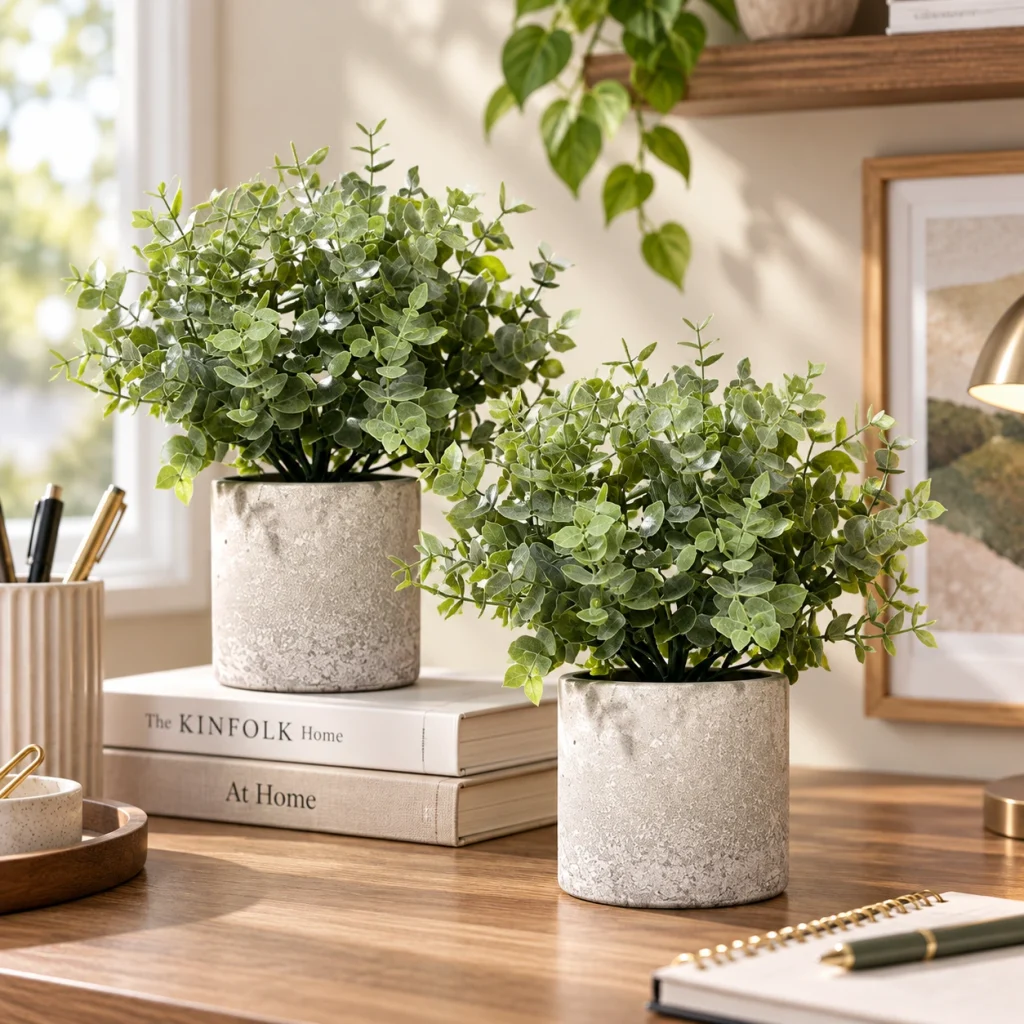
Add Greenery Without the Upkeep
Velener 2-Piece Artificial Eucalyptus Plants — Sage Green
Bring a natural touch to your workspace without needing a watering routine. These faux eucalyptus plants come in textured pots and work well on desks, shelves, or side cabinets.
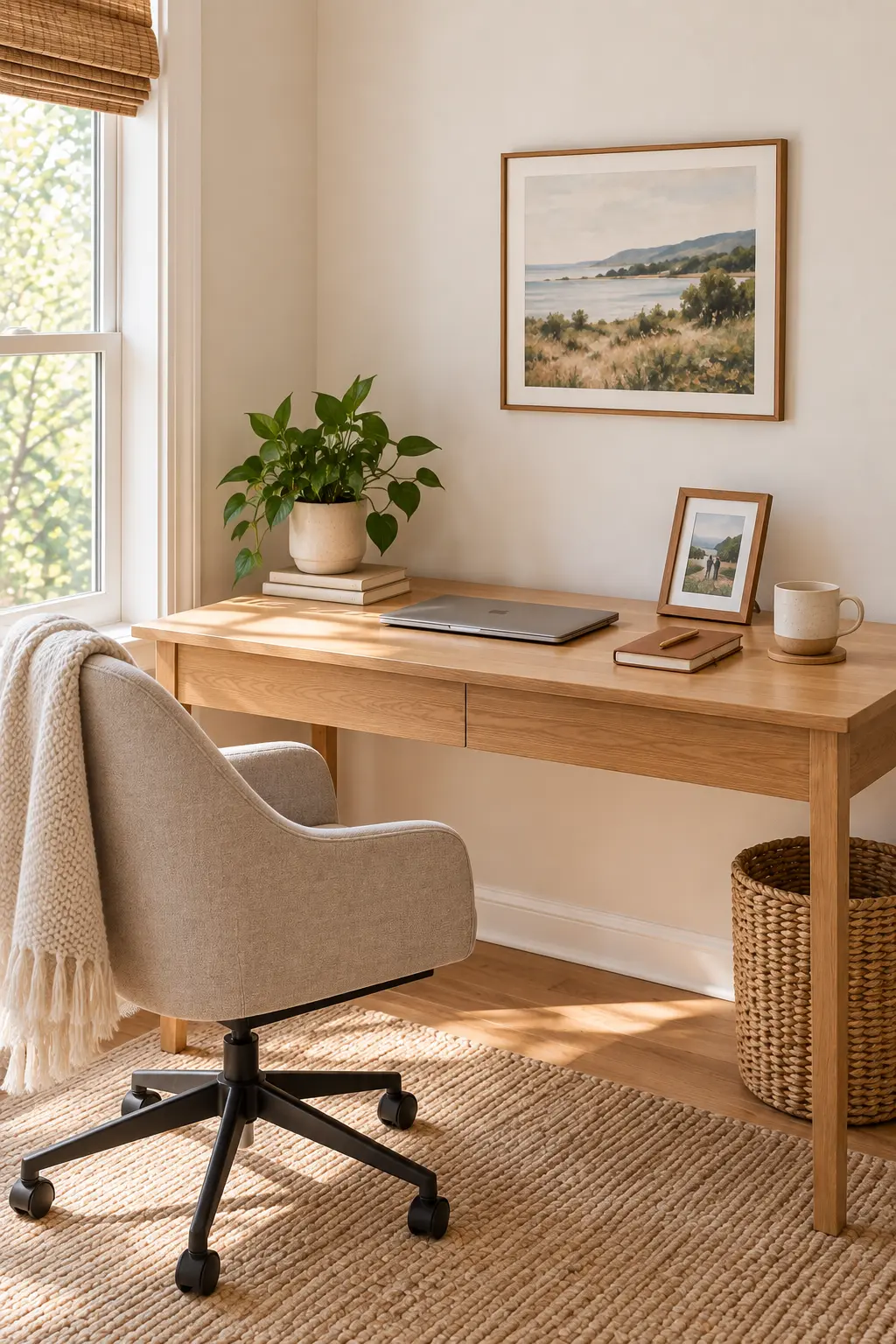
Cozy Home Office Ideas for Small Spaces
A dedicated office room is nice, but it isn’t required.
You can create a surprisingly comfortable workspace in a small bedroom, apartment, living room, hallway nook, or unused corner.
The first rule is to respect the scale of the space.
Use a compact desk
Don’t force a full-size office desk into a tiny corner if a smaller one will handle your needs.
Measure the area first, including chair clearance.
Use the walls
Floating shelves, wall organizers, and narrow storage can give you more function without filling the floor.
Keep the floor open
Furniture with visible floor underneath can make a small room feel lighter.
Avoid stacking too many bulky pieces around the workspace.
Make the workspace visually clear
Even in a shared room, the office should feel like a deliberate zone.
A small rug, artwork, shelf, or change in wall color can help distinguish it without requiring a physical room divider.
Use fewer accessories
A small office has less visual space, so accessories have more impact.
Instead of trying to recreate a large office in miniature, choose a desk, a light, one or two storage solutions, and a handful of personal details.
That usually looks more intentional.
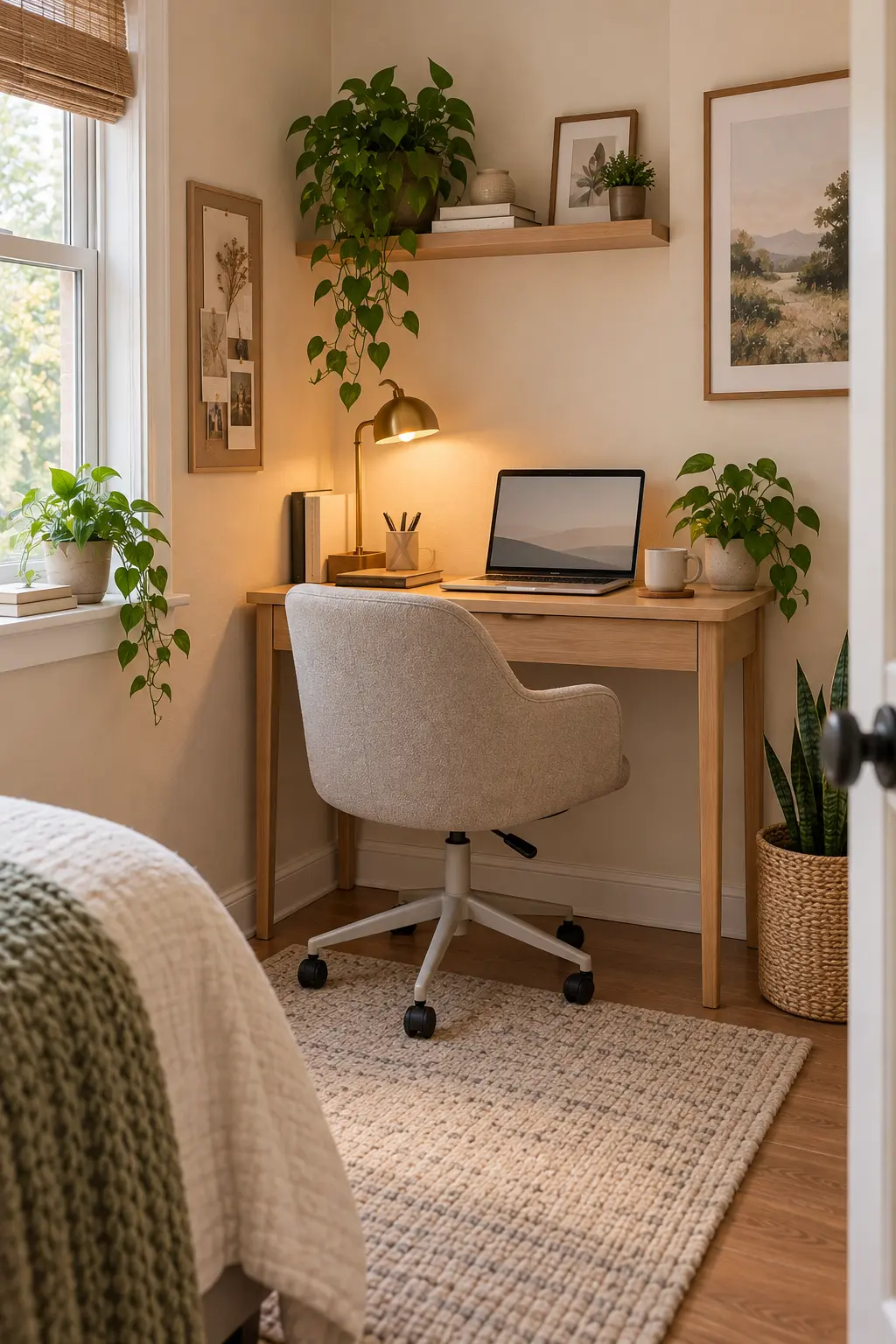
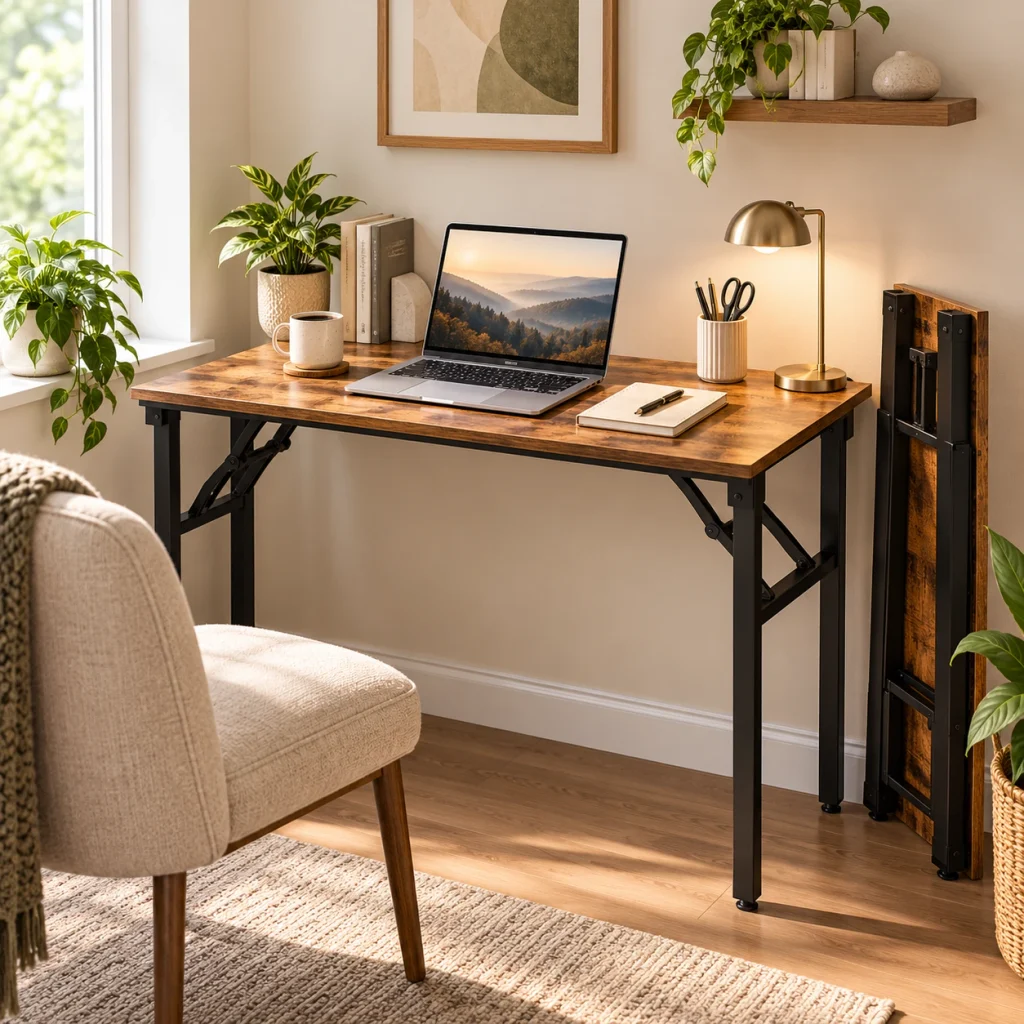
A Small Desk That Folds Away When You Need the Space
TEMI 35.8-Inch Folding Computer Desk Short on room? This compact desk gives you a practical work surface and folds away when you need more space. Its rustic brown finish also fits naturally with warm home-office decor.
Create a Home Office in a Shared or Multipurpose Room
Sometimes the only place available for an office is part of another room.
That’s completely workable.
The key is to make the office feel intentional while allowing the rest of the room to function normally.
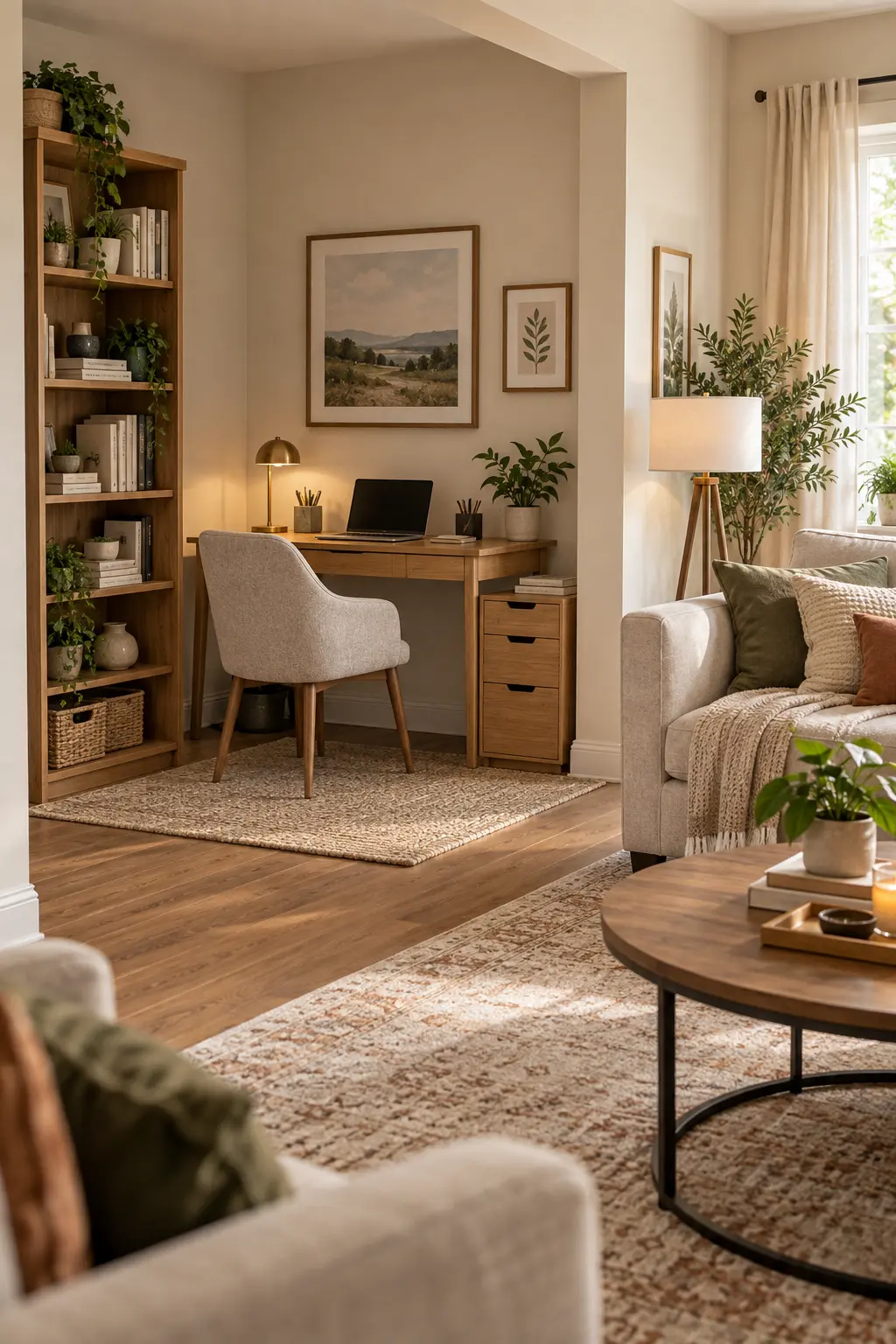
A living room corner can hold a compact desk and chair. A bedroom can use a small desk beside a wardrobe. An unused hallway nook can become a simple work zone.
Define the area
A rug can visually separate the workspace from the surrounding room.
You can also use a shelf, artwork, or furniture placement to create a subtle boundary.
Choose furniture that fits the room
A bulky office chair may look out of place in a living room, while a compact upholstered chair can blend more naturally into the space.
Create an easy end-of-day reset
This is especially important when your office shares a bedroom or living room.
Put paperwork away. Return small items to their storage spots. Route loose cables back into place. Clear the visible work surface.
The point isn’t to hide every sign that you work from home.
It’s to make it easy for the room to become a normal living space again.
Cozy Home Office Ideas on a Budget
You can improve a home office without replacing every piece of furniture.
Start by asking:
What bothers me the most about this room?
Start with the problem that bothers you most. Harsh lighting should be fixed first if it makes the room uncomfortable. For a cluttered desk, improve the organization before buying more decor. When the room feels empty, consider adding texture or artwork. And if the chair is uncomfortable, that may be the place where spending money makes the most sense.
Rearrange before replacing
Try moving the desk to another wall.
Change the position of the chair. Move artwork from another room. Rearrange the objects on your shelves.
A different layout can make familiar furniture feel completely different.
Shop your own home
A wooden tray from the living room, a framed print from the hallway, a ceramic container, or a small plant may already work in the office.
Add one layer at a time
You don’t need to finish the room in one shopping trip.
Improve the lighting first. Then add a rug if the room still feels cold. Later, consider artwork or storage. For more ideas on creating a warm and comfortable space, explore these cozy bedroom decor ideas.
This makes it easier to see what the room actually needs.
Spend where it matters
A small decorative accessory can be fun, but if your chair is uncomfortable or the desk is too small, those should come first.
The goal isn’t to spend less on everything.
It’s to spend intentionally.
Choose a Cozy Home Office Style That Fits Your Home
A decorating style can help when you aren’t sure which colors, materials, and accessories belong together.
You don’t have to follow one style perfectly. Use these as starting points.
Warm Minimal
Think warm white walls, natural wood, simple furniture, soft textiles, and very little visual clutter.
This works well when you want a calm office that still feels welcoming.
Natural and Scandinavian-Inspired
Use light wood, soft neutral colors, simple shapes, woven textures, greenery, and plenty of natural light.
The overall feeling should be relaxed and uncomplicated.
Soft Modern
Combine clean-lined furniture with warm colors, rounded accessories, natural textures, and understated artwork.
It’s a good option when you like modern design but don’t want the room to feel cold.
Traditional and Vintage
Wood furniture, framed artwork, books, classic lighting, and richer materials can create a more collected feeling.
The trick is to keep the work area practical even when the room has a more traditional personality.
Moody and Cozy
Deep greens, brown, charcoal, warm wood, and softer lighting can create a more intimate office.
This can work beautifully in a room with enough natural or layered artificial light to keep it from feeling too dark.
Rather than copying a style exactly, choose the elements that make sense with the rooms around your office.
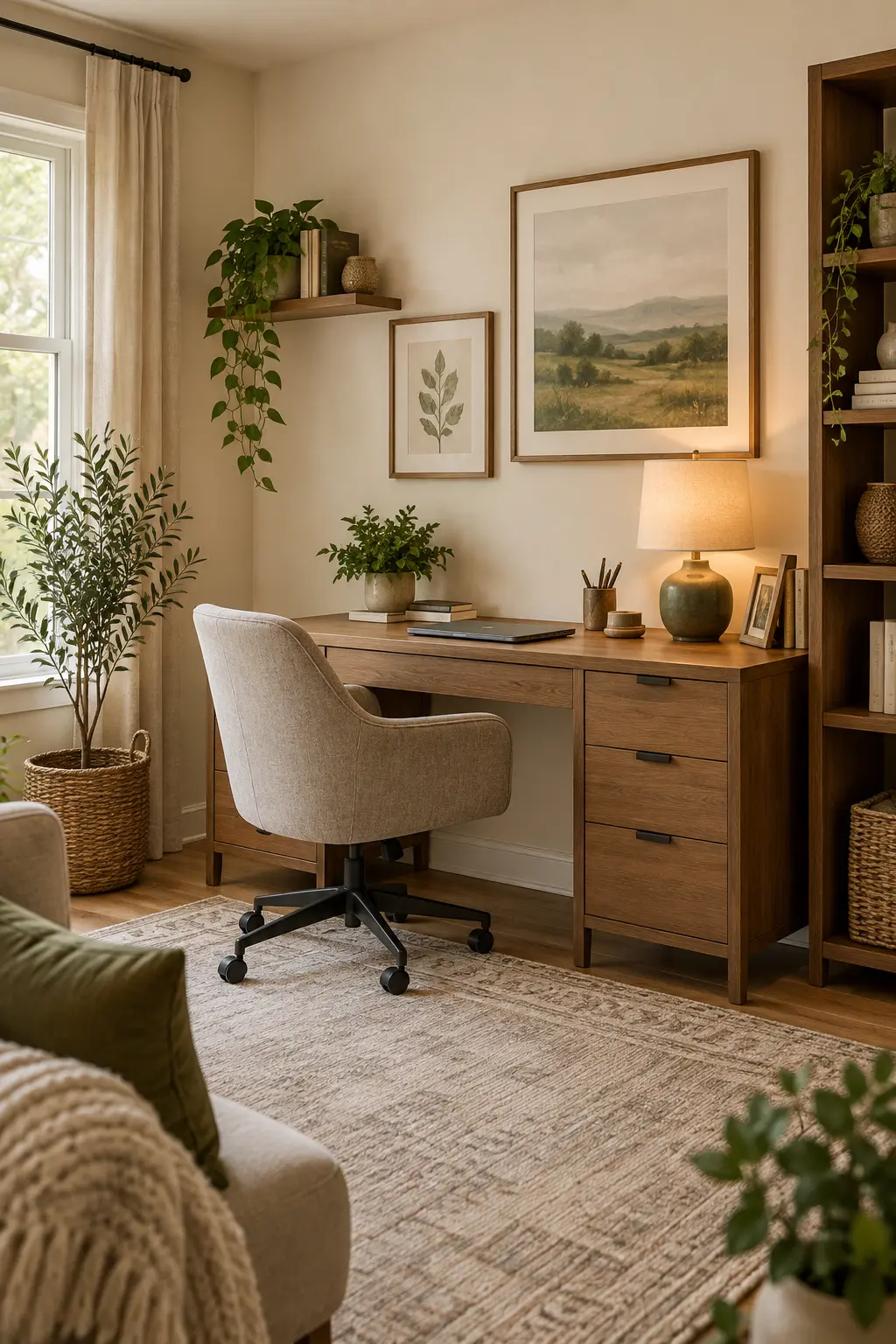
Common Home Office Decorating Mistakes
A few small decisions can make a big difference in how the room feels.
Buying furniture before measuring
Always measure first.
Consider desk size, chair clearance, doors, walkways, outlets, and storage.
Relying on one overhead light
One bright fixture can make a room feel harsh.
Layer your lighting instead.
Filling every shelf
Open space is useful.
A shelf packed from edge to edge can make an otherwise calm room feel busy.
Adding too many colors
Choose a small palette and repeat it through furniture, textiles, artwork, and accessories.
Making the desk too decorative
Your desk is still a work surface.
Keep decorative items away from the areas you need for daily work.
Ignoring cable clutter
Messy cords can undo the effect of a beautifully decorated workspace.
Deal with them before adding more decor.
Buying storage without addressing clutter
More storage isn’t always the answer.
First decide what you actually need to keep, what should be put away, and what can be removed.
Designing for photographs instead of real life
A room can look fantastic in a picture and still be frustrating to work in.
Think about your normal day.
Think about the small details of your normal routine. Where do you put your headphones, and where do you charge your devices? Consider where papers go and whether you can pull your chair out easily.
A cozy office should work for real, not just look good for five minutes. The same practical approach can help when creating cozy living room ideas for small apartments.
What to Change First: A Simple Cozy Home Office Plan
Not sure where to begin?
Start with the problem you notice most.
If the office feels cold
Start with lighting.
Add warmer task or ambient lighting, then consider wood and soft textures.
If it feels cluttered
Start with organization.
Clear the desk, separate everyday items from occasional supplies, and create a place for the things that keep piling up.
If it feels uncomfortable
Start with the desk and chair.
Make sure your setup fits the room and your daily routine.
If it feels boring
Start with color and personality.
Artwork, a plant, a rug, or a small change in color can add character without requiring a major makeover.
If it feels cramped
Start with layout and furniture scale.
A smaller desk or a better furniture arrangement may create more improvement than another decorative item.
If you don’t know what to do first
Use this order:
Clear → Measure → Rearrange → Improve lighting → Add warmth → Organize → Personalize
Give yourself permission to stop once the room works.
You don’t have to use every wall, every shelf, or every empty corner. For more ways to create a warm, balanced space throughout your home, explore these cozy home decor ideas .
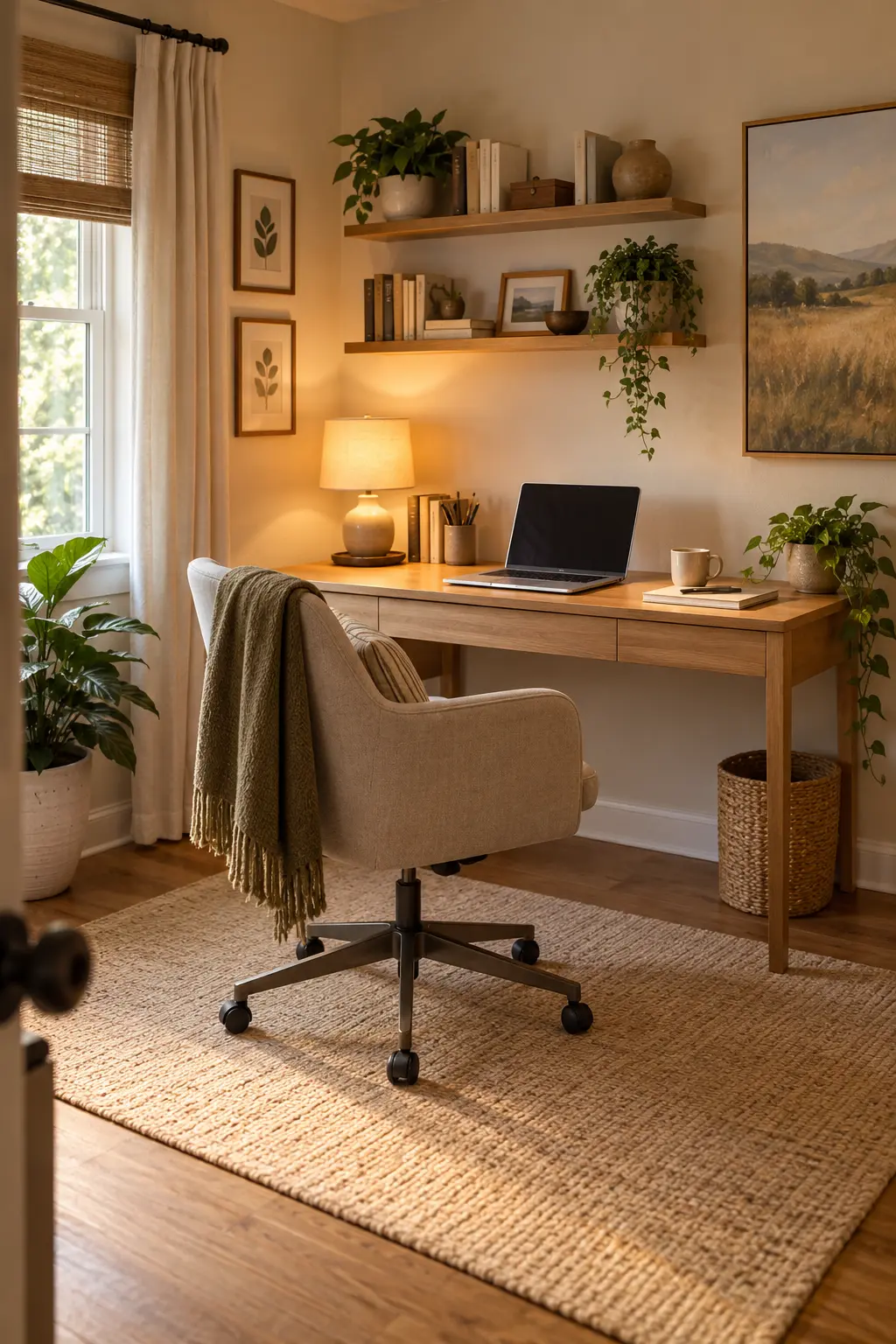
Final Thoughts
Creating a cozy home office isn’t about copying a perfect room from Pinterest or buying a completely new set of furniture.
Start with the room you already have.
Fix the layout. Make the desk and chair work for you. Improve the lighting. Add warmth through color, wood, and texture. Then organize the things that create clutter and finish with a few personal details.
You don’t need to complete everything in a weekend.
A better workspace can come from a handful of thoughtful changes rather than a room full of new purchases.
The goal is simple: a home office that feels comfortable enough to enjoy and functional enough to get real work done.
Frequently Asked Questions About Cozy Home Office Ideas
Start with warm, neutral colors and add natural materials such as wood, woven textures, and soft textiles. Layer your lighting, add a plant or two, and keep the desk organized. The goal is to create a workspace that feels comfortable and personal without becoming cluttered.
Choose furniture that fits the room rather than trying to squeeze in full-size pieces. Use vertical storage such as floating shelves, keep the floor visually open, and limit accessories to items that are useful or meaningful. A compact desk and a well-chosen chair can be enough to create an effective workspace.
Look for an unused corner in a bedroom, living room, hallway, or another suitable area. Define the workspace with a compact desk, area rug, lighting, or vertical storage. Keeping the office visually organized helps it feel like a deliberate zone rather than furniture placed temporarily in the room.
Warm white, cream, beige, taupe, muted green, soft brown, and other earthy neutrals can create a calm and welcoming office. Natural wood works especially well with these colors. Choose one main neutral, one supporting color, and a small number of accent tones rather than mixing too many competing colors.
Keep the items you use every day within easy reach and group smaller supplies together in one organizer or tray. Leave part of the desktop clear for actual work. A lamp, small plant, notebook, or one meaningful decorative object can add warmth without filling the entire surface.
A combination of natural light, task lighting, and softer ambient lighting can make a home office feel both practical and inviting. Use focused light where you work and warmer accent lighting elsewhere in the room. Adjustable lighting can also give you more flexibility throughout the day.
Use storage that works with the room’s existing style. Wooden organizers, woven baskets, floating shelves, and closed drawers can hide everyday clutter while keeping the space visually warm. Mix practical storage with a few decorative elements so the workspace still feels connected to the rest of your home.
Start with what you already own before buying new decor. Rearranging furniture, adding a lamp, moving artwork from another room, using a basket for storage, or introducing a plant can make a noticeable difference. Spend first on items that solve a real problem, such as lighting, storage, or a suitable desk.
Create a visual boundary without needing a wall. A small area rug, consistent lighting, a compact desk, or a vertical shelf can help define the workspace. Keep the colors and materials connected to the surrounding room so the office feels integrated rather than visually disconnected.
Common mistakes include choosing furniture that is too large for the room, relying on one harsh light source, filling every shelf and wall, and allowing the desk to become cluttered. A cozy office works best when comfort, organization, and decoration are balanced.