
Introduction
A cozy home doesn’t come from filling every corner with decor. It comes from creating spaces that make you want to slow down and stay awhile.
In a small apartment, an unused corner can become one of the most meaningful spaces in your home. You don’t need a dedicated reading room, a large bookshelf, or expensive furniture. With the right combination of comfortable seating, warm lighting, soft textures, and a little intentional styling, even a narrow corner can become a peaceful place to read, relax, and disconnect from the rest of the day.
The best reading corner ideas are not about adding more things. They are about choosing a few pieces that work beautifully together and giving each one enough space to breathe. A comfortable chair can become the foundation, a warm lamp can create the right atmosphere, and a small shelf or side table can keep your favorite books close without making the area feel cluttered.
In this guide, we’ll explore how to create a calm, cozy reading corner in a small apartment—from choosing the right location and seating to getting the lighting, storage, textures, and finishing touches right.
The goal is simple: create a reading corner that feels like a little escape without taking over your home.
Affiliate Disclosure: This post may contain affiliate links. This means I may earn a small commission at no extra cost to you if you purchase through my links. I only recommend products that align with a cozy, minimalist, and functional home aesthetic.
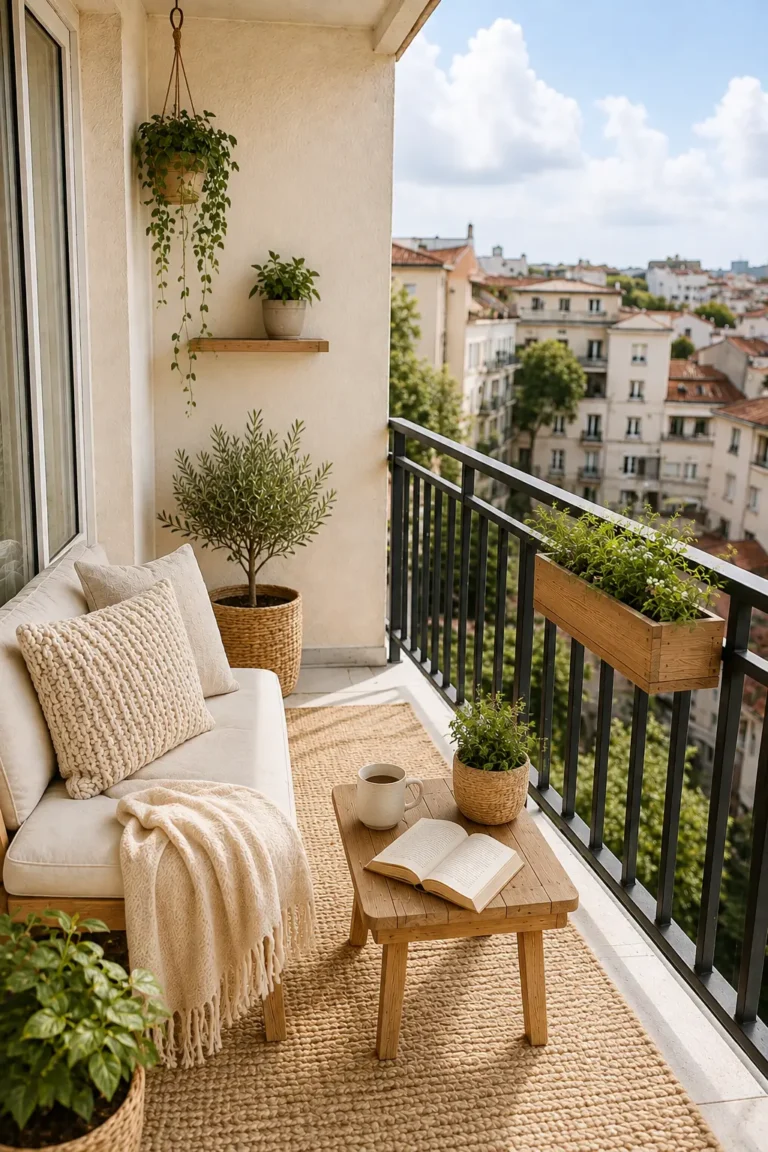
Want to recreate the cozy balcony look?
I’ve gathered the balcony-friendly pieces featured in this guide in one curated Amazon list, so you can browse everything in one place.
1. Find the Right Spot for Your Reading Corner
Finding the right location is the first step in creating a reading corner that you will actually use. You don’t need an entire room. Look for an underused area where you can create a comfortable little zone without interfering with the main flow of the apartment.
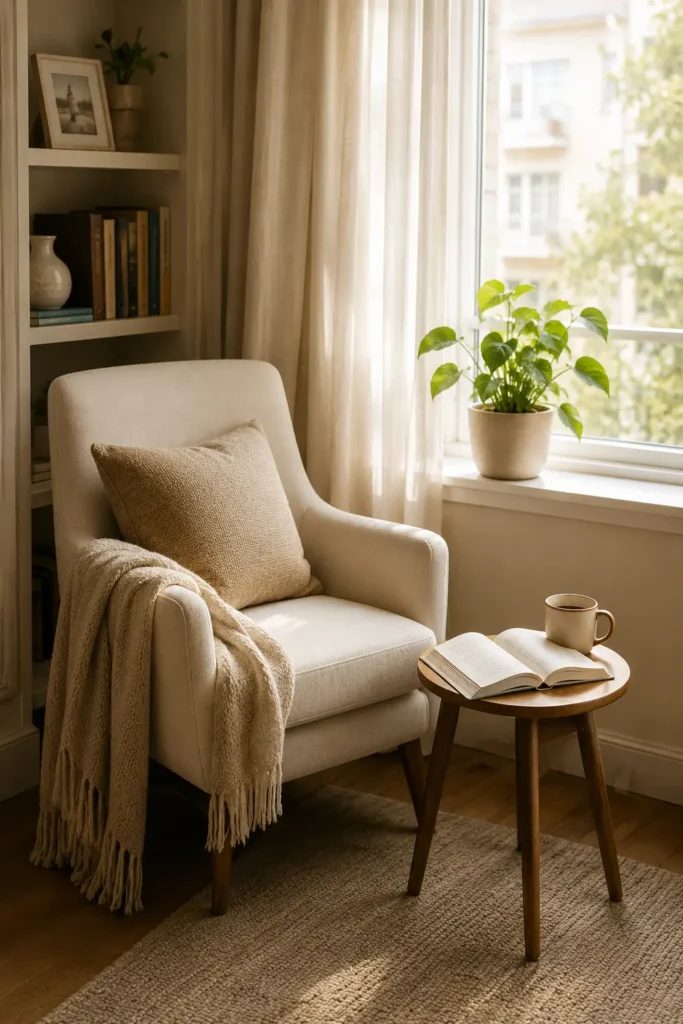
A corner beside a window is often ideal because natural light makes the space feel brighter and more inviting during the day. A quiet bedroom corner can work well if you prefer reading before bed, while an unused area beside a living-room window or bookshelf can become a shared space that feels connected to the rest of your home.
Look for overlooked spaces
Small apartments often have more possibilities than they seem to at first. Consider:
- An empty corner beside a window
- The space next to a bookshelf
- An unused corner of the bedroom
- A narrow area beside a sofa
- An awkward corner that is difficult to furnish
- A small alcove or recessed wall
- A quiet spot near a balcony or large window
The important thing is not the size of the space. It is whether the area can comfortably accommodate your chair, lighting, and a small surface for your essentials.
Think about how you move through the room
Avoid placing your reading chair directly in a main walkway. You want the corner to feel slightly separated from everyday movement, even when it is part of a living room or bedroom.
Before buying anything, use masking tape to mark the approximate footprint of the chair and side table on the floor. Sit nearby and imagine reaching for a book, turning on a lamp, or getting up from the chair.
This simple test can prevent one of the most common small-space mistakes: buying furniture first and discovering later that the corner feels cramped.
A successful reading corner should feel like a natural part of your home while still giving you a small sense of separation from everything else happening around you.
2. Cozy Reading Corner Lighting: Atmosphere First
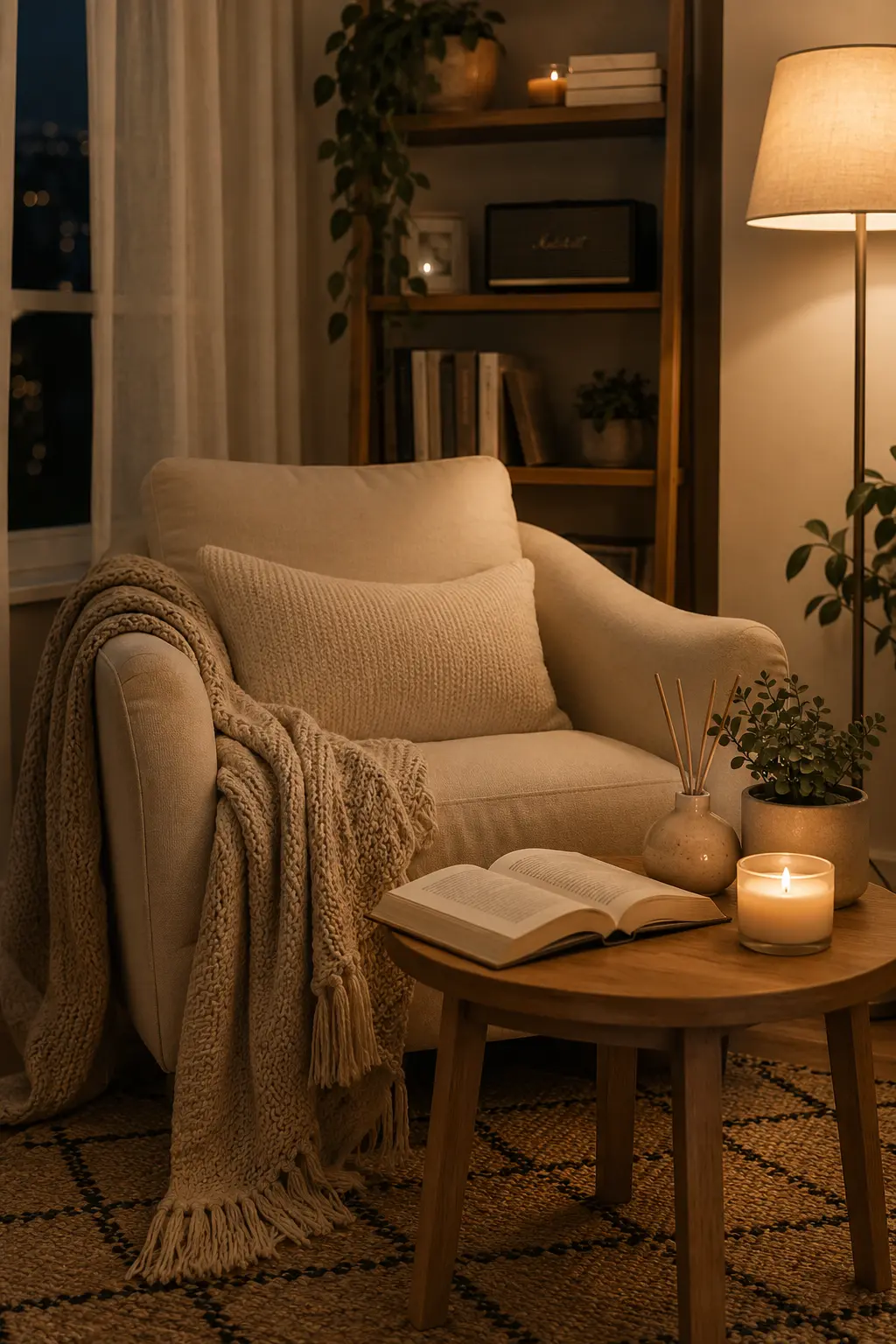
Lighting defines the mood of a reading corner more than almost anything else. Even a beautiful chair can feel uninviting if the light is harsh, too cool, or positioned poorly.
If your reading corner has access to natural light, start there. A spot near a window can make the space feel open and pleasant during the day. But avoid placing your chair where direct sunlight creates glare on your book or makes the corner uncomfortably warm.
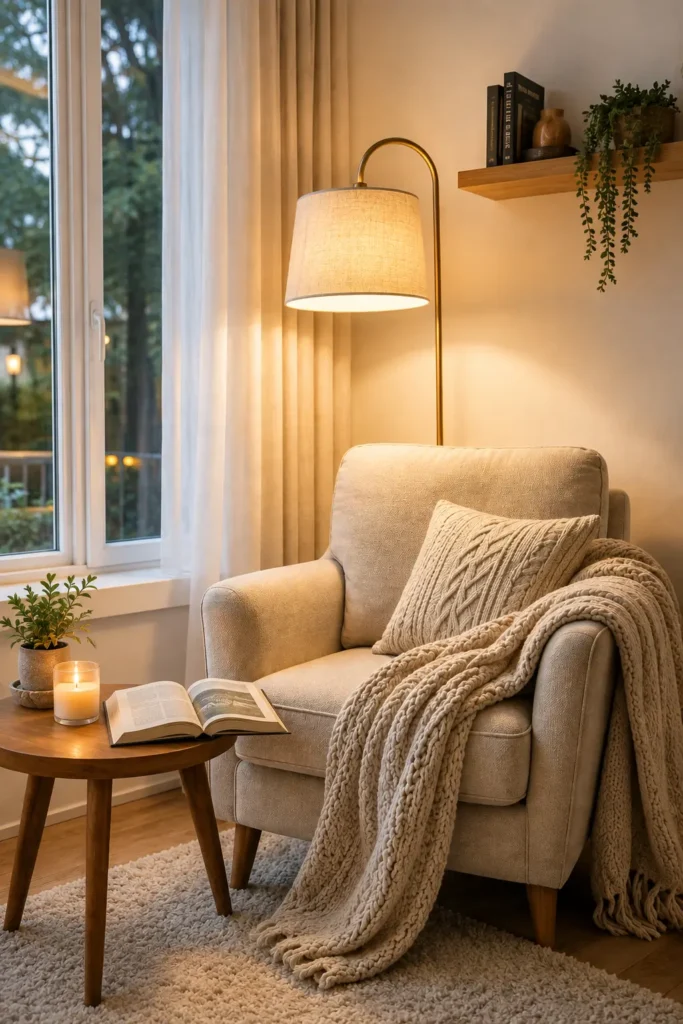
For evenings, layer your lighting instead of relying on one bright overhead fixture. A warm table lamp, floor lamp, or wall sconce can provide focused light for reading while keeping the rest of the corner softly illuminated.
Think in three layers:
- Natural light: Use daylight whenever possible, especially in the morning or afternoon.
- Task lighting: Place a warm reading lamp beside or slightly behind your chair so the page is well lit without creating harsh shadows.
- Ambient lighting: Add a softer source nearby, such as shelf lighting or a small decorative lamp, to create a gentle glow around the space.
For a cozy atmosphere, warm-toned light generally works better than stark, cool-white lighting. The goal isn’t to make the entire room extremely bright. It’s to create a comfortable pool of light around your reading spot while allowing the surrounding room to remain softer and calmer.
A simple rule: if you can comfortably read for an hour without squinting or feeling like the light is shining directly into your eyes, your lighting is doing its job.
And don’t forget the daytime view. A reading corner beside a window, overlooking a garden, balcony, or even a quiet street, can become much more inviting when the natural surroundings become part of the experience.
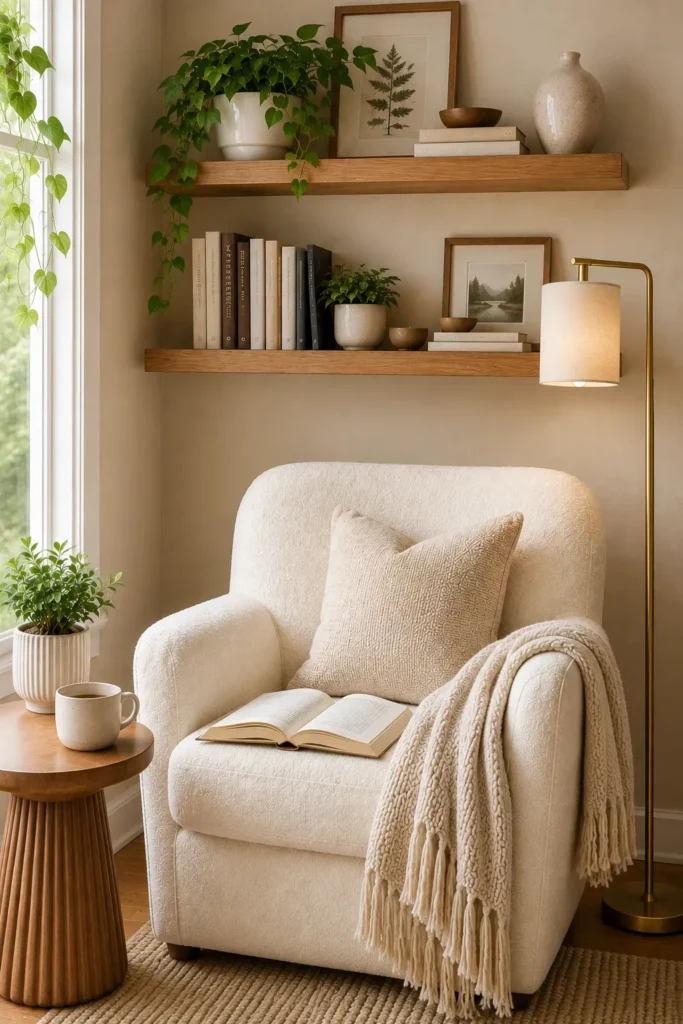
3. Reading Corner Ideas: Shelf Styling That Feels Calm
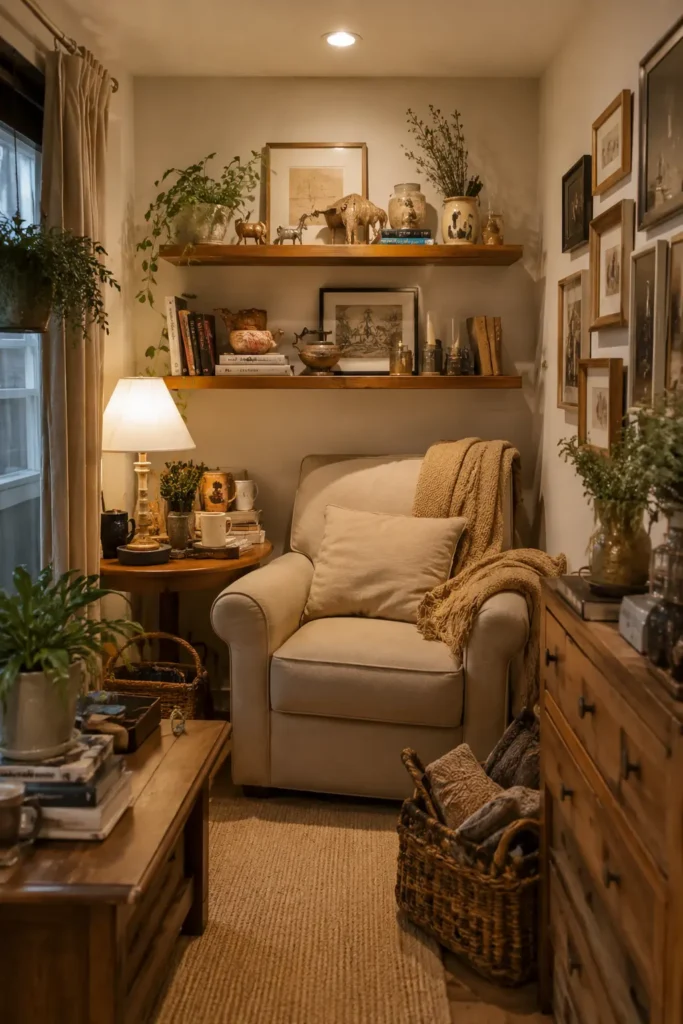
A reading corner does not need a large bookcase to feel complete. In a small apartment, a few thoughtfully styled shelves can provide storage while also giving the space personality.
The key is to avoid making the shelves feel like a display cabinet packed with objects. Instead, treat your books and decor as part of the atmosphere.
Start with the books you actually enjoy reading. Stack a few horizontally and place others vertically to create variation. You can group books by size or keep a small selection of your current favorites within easy reach of your chair.
Then add only a few decorative pieces. A small ceramic vase, framed artwork, a simple plant, or a sculptural object can soften the look without competing with the books.
Keep the styling visually calm
A simple shelf arrangement often works better than a perfectly symmetrical one. Leave some empty space between groups of books and accessories. That negative space prevents the shelves from becoming visually overwhelming.
You can also repeat one or two materials throughout the arrangement. Warm wood, natural ceramics, woven baskets, or soft neutral colors can help connect the shelves with the rest of the reading corner.
If your shelves include lighting, keep it warm and subtle. LED strip lighting underneath a shelf can create a soft evening glow without making the reading corner feel overly decorated.
A simple shelf-styling formula
Try this combination:
- Books: The main functional element and the visual foundation.
- One natural element: A small plant, branch, or dried arrangement.
- One personal element: A framed photograph, artwork, or meaningful object.
- Empty space: Leave room between groups so the arrangement can breathe.
The goal is not to make every shelf look styled. The goal is to make the entire corner feel intentional.
If you have very little storage space, use the lower shelves for books and practical items while keeping the eye-level shelves lighter and more decorative. This creates a reading corner that looks calm while still working hard for a small home.
4. Cozy Reading Corner Seating That Feels Soft and Supportive
The chair is the heart of a reading corner. You can have beautiful lighting and perfectly styled shelves, but if the seating is uncomfortable, you won’t want to spend much time there.
For a small apartment, choose seating based on both comfort and scale. A compact upholstered armchair can provide enough support without overwhelming the corner. If space is extremely limited, a cushioned accent chair, lounge chair, or even a well-padded floor chair can work beautifully.
Look for a seat that supports your back and allows you to settle into a relaxed reading position. The ideal chair doesn’t have to be oversized. What matters more is having enough room to sit comfortably without feeling cramped.
Give the chair a comfortable foundation
A supportive seat becomes much cozier with a few carefully chosen layers.
Add a soft cushion behind your back if the chair needs extra support. A small lumbar cushion can make a surprisingly big difference during longer reading sessions.
Then add a throw blanket within easy reach. Draping it casually over one arm of the chair makes it practical while also introducing softness and visual warmth.
A small footstool or ottoman can be another useful addition. It gives you somewhere to rest your feet and can make a compact chair feel much more comfortable without requiring a large recliner.
Think about placement
Position the chair so it feels connected to the rest of the room without sitting directly in the main walking path. A corner beside a window, near a bookshelf, or next to an unused wall can work particularly well.
Leave enough space around the chair to move comfortably. You should be able to sit down, stand up, and reach your lamp or side table without constantly moving other furniture.
If your reading corner is in a very small room, avoid pushing too many pieces into the area. One comfortable chair, one light source, and one small surface for your book and drink may be all you need.
The best reading corner seating is ultimately the kind that makes you want to stay for one more chapter.
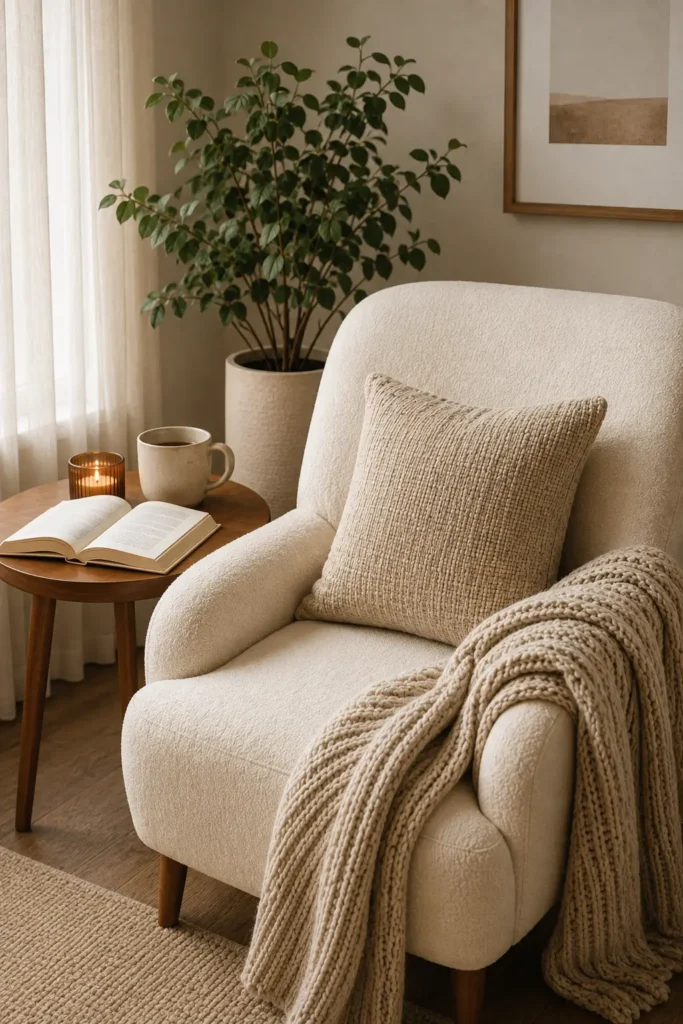
5. Cozy Textures for a Relaxing Reading Corner
A reading corner can look beautiful and still feel cold if everything around it is hard, smooth, and visually flat. Texture is what makes the space feel inviting.
Instead of adding lots of decorations, introduce softness through a few practical pieces. A knitted throw, cushioned chair, woven basket, textured rug, or linen curtain can make the corner feel warmer without creating visual clutter.
Layer textures, not clutter
Start with the largest surfaces first. If your reading chair has a simple fabric finish, add a soft throw or cushion with a slightly different texture. Then look at the floor. A small area rug can visually define the reading corner while adding warmth underfoot.
Natural materials work particularly well with minimalist interiors. Wood, cotton, linen, wool, rattan, and ceramic pieces can create subtle variation while keeping the overall palette calm.
Try to vary the textures without introducing too many competing patterns. For example, a chunky knitted throw can pair beautifully with a smooth ceramic lamp and a woven basket. The contrast makes each material more noticeable without making the corner feel busy.
Use a calm color palette
Texture becomes especially effective when the colors remain restrained. Warm whites, cream, beige, soft brown, muted green, and other natural tones can create a relaxed backdrop for reading.
You don’t need every item to match. Instead, choose a small family of complementary colors and repeat them across the chair, rug, blanket, and accessories.
This creates visual continuity and helps the reading corner feel like part of your cozy home decor rather than a collection of unrelated objects.
The goal is simple: when you look at the corner, you should notice how comfortable it feels before you notice how many decorative pieces are there.
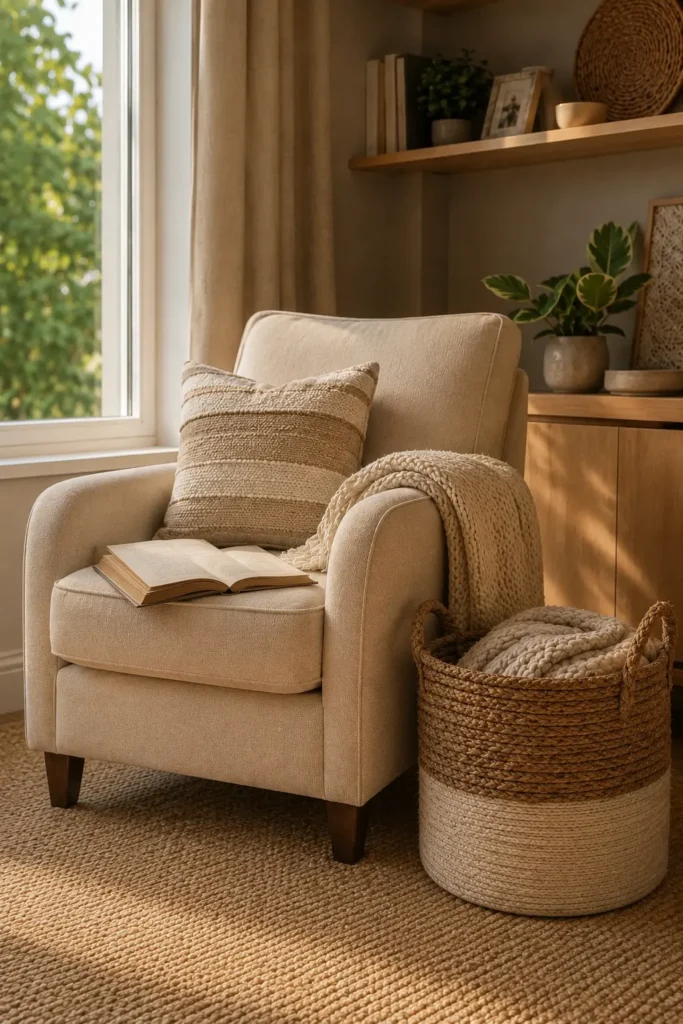
6. Smart Storage for a Cozy Reading Corner
Good storage should make a reading corner easier to use without making it feel like a storage area. In a small apartment, every piece should ideally serve a purpose while still contributing to the overall look of the space.
Start by keeping your most-used items close to the chair. A small side table can hold your current book, reading glasses, a cup of tea, or a small lamp without taking up much floor space.
If you need more storage, look upward. Floating shelves can use vertical wall space while keeping the floor open. A narrow bookcase can also work well when positioned beside the chair rather than directly in front of it.
Make everyday storage look intentional
Baskets are especially useful in small reading corners. Use one for extra blankets, magazines, or books you are currently reading. A woven basket adds texture while keeping everyday items contained.
You can also use furniture that performs more than one job. An ottoman with hidden storage can provide somewhere to rest your feet while giving you a place to store blankets. A small cabinet can hold books and accessories while doubling as a surface for a lamp or plant.
The trick is to avoid filling every available shelf and surface. Leave some open space so the corner continues to feel calm.
Keep your reading essentials within reach
Think about what you actually use while reading and organize around those habits.
Your current book should be easy to reach. A reading lamp should be positioned where you can operate it without getting up. A blanket should have a dedicated place nearby rather than being left on the floor.
This kind of practical organization makes the corner feel effortless. You spend less time looking for things and more time enjoying the space.
In a minimalist reading corner, good storage should almost disappear. You notice the calm, not the containers.
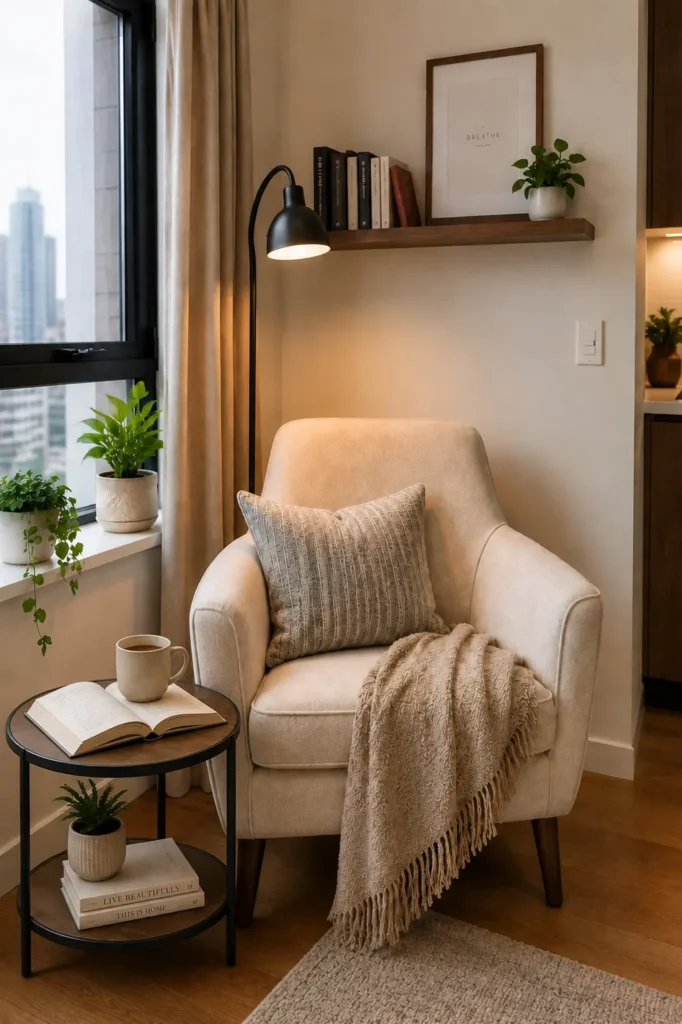
7. Small Apartment Reading Corner Ideas That Actually Work
A small apartment doesn’t mean you have to give up on having a dedicated reading space, especially when you approach the room with a thoughtful small-space decorating plan. The trick is to work with the space you already have instead of trying to create a separate room.
Use a window corner
A corner beside a window can become an inviting reading spot with just three essentials: a comfortable chair, a reading lamp, and a small side table. Keep the surrounding area relatively open so the natural light and view remain part of the experience.
Turn an unused bedroom corner into a retreat
If your bedroom has an empty corner, a compact armchair can create a quiet place to read without taking over the room. Add a small rug underneath the chair to visually separate the reading area from the sleeping area.
Make use of a living-room corner
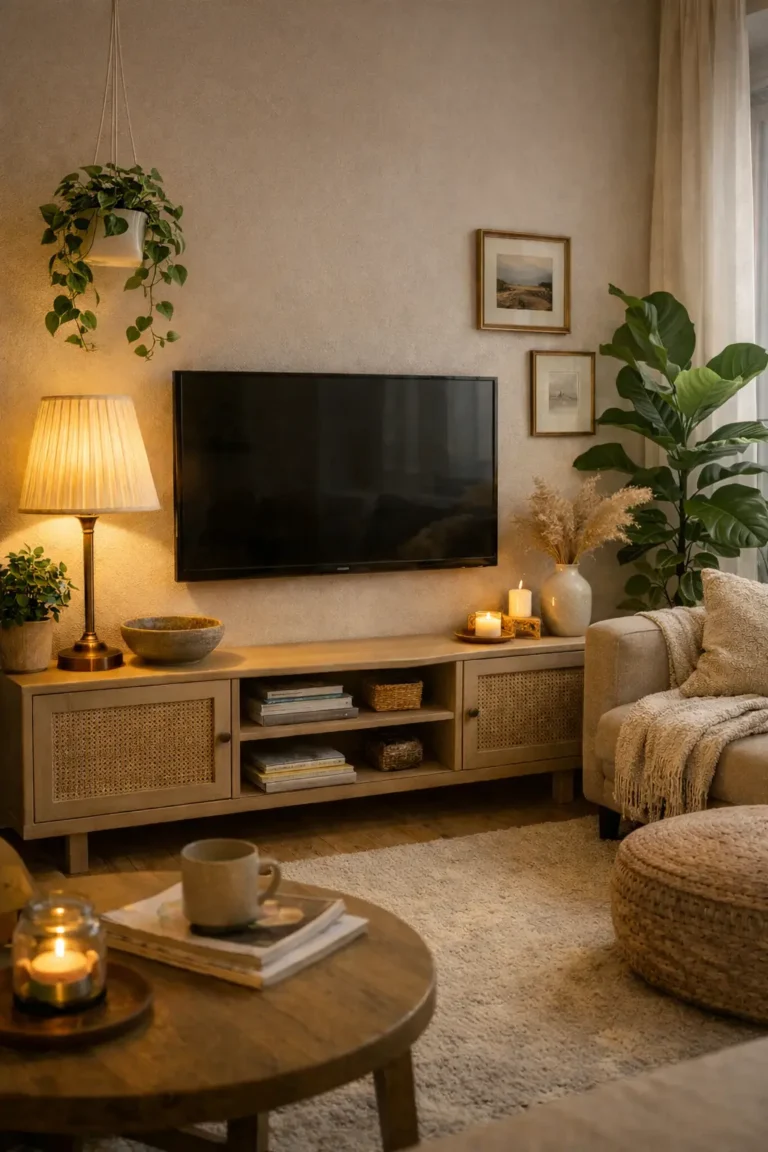
A reading corner doesn’t have to be completely isolated. If your living room already has a cozy TV area, you can use an unused corner beside the sofa or entertainment space to create a separate reading spot. This creates a secondary activity zone while keeping the main living area functional.
Work with narrow spaces
For very tight apartments, choose furniture with a smaller footprint. A slim accent chair, wall-mounted shelf, narrow side table, or floor lamp can provide the essentials without making the walkway feel crowded.
Use vertical space
When floor space is limited, look upward. Floating shelves can provide book storage without using valuable floor area. A wall-mounted reading light can also free up the surface of a side table.
The best small-apartment reading corners are usually the simplest ones. Start with the space you already have, choose pieces that fit comfortably, and avoid adding furniture simply because a reading corner is supposed to contain certain things.
You don’t need a perfect nook. You just need a comfortable place where you can sit down, open a book, and stay for a while.
8. Common Reading Corner Mistakes to Avoid
Creating a cozy reading corner is usually less about adding more and more decor and more about avoiding a few common mistakes. A simple space can feel much more inviting when the basics are right.
Choosing comfort over appearance—or appearance over comfort
A beautiful chair that becomes uncomfortable after fifteen minutes is not a successful reading chair. At the same time, an oversized recliner can make a small apartment feel crowded. Look for the balance between support, comfort, and the available floor space.
Using only overhead lighting
A ceiling light may illuminate the room, but it doesn’t necessarily create the right reading environment. Add a dedicated lamp near your chair so you can control the light when you want to read in the evening.
Filling every surface with decor
Shelves, side tables, and the floor don’t need to be completely covered. Too many accessories can make a small reading corner feel busy and reduce the sense of calm you’re trying to create.
Choose a few pieces you genuinely like and leave some empty space around them.
Ignoring the walking path
Before placing a chair, check how people move through the room. A reading corner should feel like a destination, not an obstacle. Keep enough clearance around the furniture so you can move comfortably through the space.
Choosing furniture that is too large
Measure the area before buying anything. A chair that looks perfectly proportioned in a large showroom may overwhelm a small apartment.
Use the footprint of the furniture—not just its visual appearance—to decide whether it belongs in your space.
Trying to match everything perfectly
Your chair, rug, lamp, shelves, and accessories don’t need to come from the same collection. A mix of complementary materials and neutral tones often creates a warmer and more personal result.
The goal is cohesion, not perfection.
Adding products before understanding the space
It’s easy to start shopping as soon as you see beautiful reading-corner inspiration. But begin with the space itself.
Measure the corner, decide what you actually need, and identify what you already own that could work. Then buy only the pieces that solve a real problem or meaningfully improve the experience.
A cozy reading corner should feel effortless. If the space is comfortable, functional, and visually calm, you already have most of what you need.
9. Scent and Sound for a Cozy Reading Corner
The final layer of a cozy reading corner is not another piece of furniture. It is the atmosphere you create around it.
Once the practical elements are in place—comfortable seating, good lighting, useful storage, and soft textures—small sensory details can make the space feel more personal and relaxing.
Use scent sparingly
A subtle scent can help create a sense of calm, especially if you already associate certain fragrances with relaxing moments. A small candle, essential-oil diffuser, or naturally scented object can work well.
Keep the fragrance gentle rather than overwhelming. The reading corner should feel fresh and comfortable, not heavily perfumed.
Create a quieter atmosphere
Sound matters too. If your home is naturally quiet, let that become part of the experience. If you live in a busy apartment or near a noisy street, soft background sounds can help create separation from the rest of the home.
You might use gentle instrumental music, ambient sounds, or even a small white-noise machine. The goal is not to fill the silence constantly, but to create an environment where you can concentrate and relax.
Add one or two personal details
This is where your reading corner should become yours.
Keep a favorite book on the side table. Add a small plant, a piece of artwork, a meaningful object, or something collected from a place you love.
You don’t need many accessories. One or two personal details can make the corner feel much more intentional than a shelf filled with decorative objects chosen only to look good.
The best cozy reading corner balances function with feeling. Everything should have a reason to be there, but the space should still feel relaxed rather than perfectly staged.
When you sit down and instinctively want to reach for your next chapter, you know you’ve created the right atmosphere.
Key Takeaways
If you’re building a calm home, not just decorating a house —
save this guide, explore our cozy living ideas, and start creating spaces that support your nervous system, not overwhelm it.
SHOP THE LOOK
Create this cozy reading corner with these carefully selected pieces.
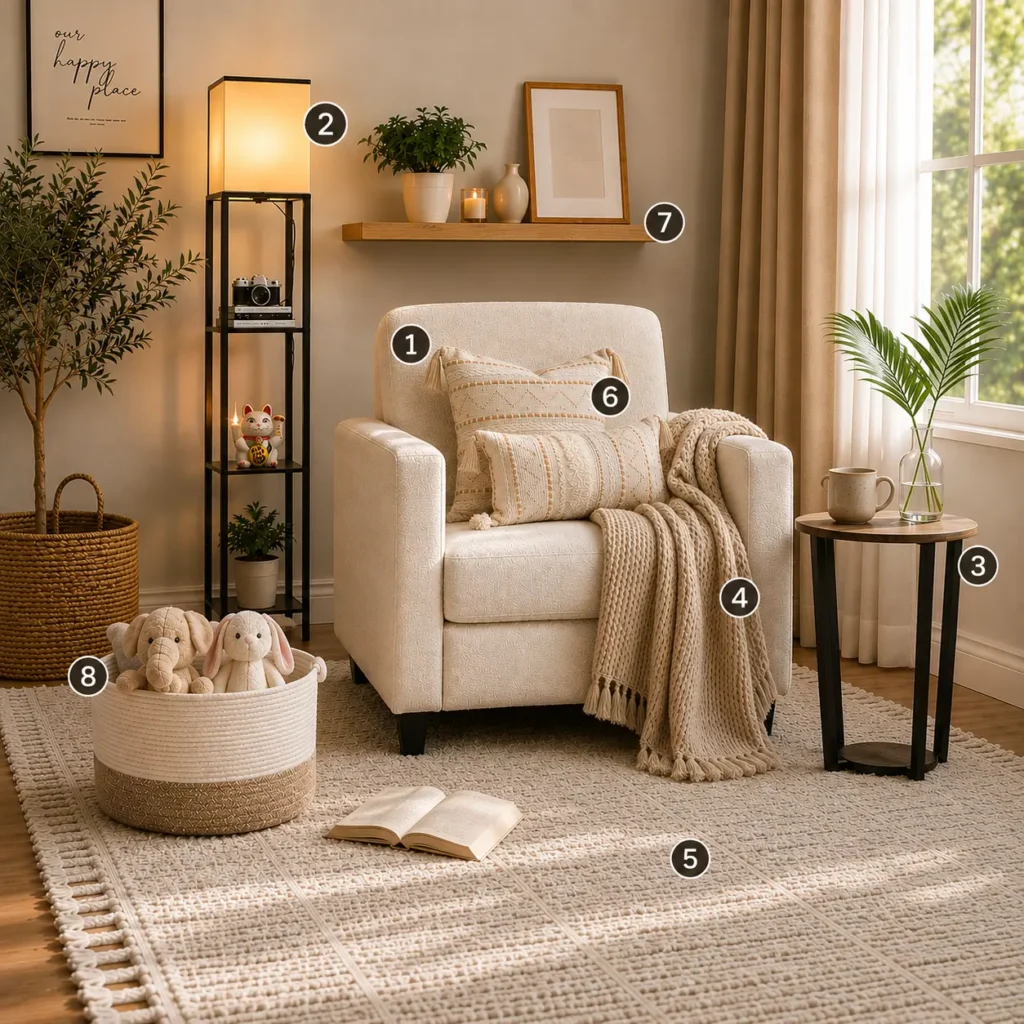
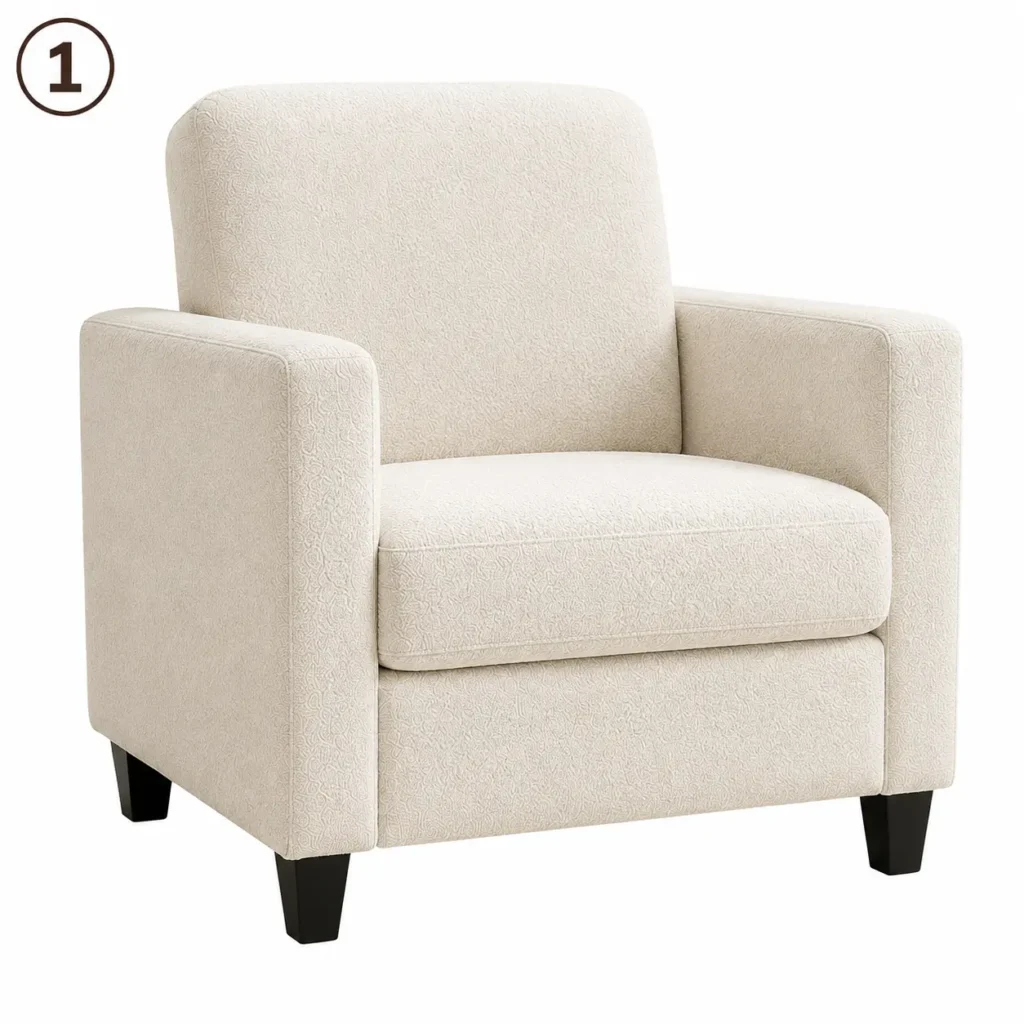
Reading Accent Chair
A soft teddy-fabric armchair with a wide seat that creates a comfortable, inviting spot for reading and relaxing.
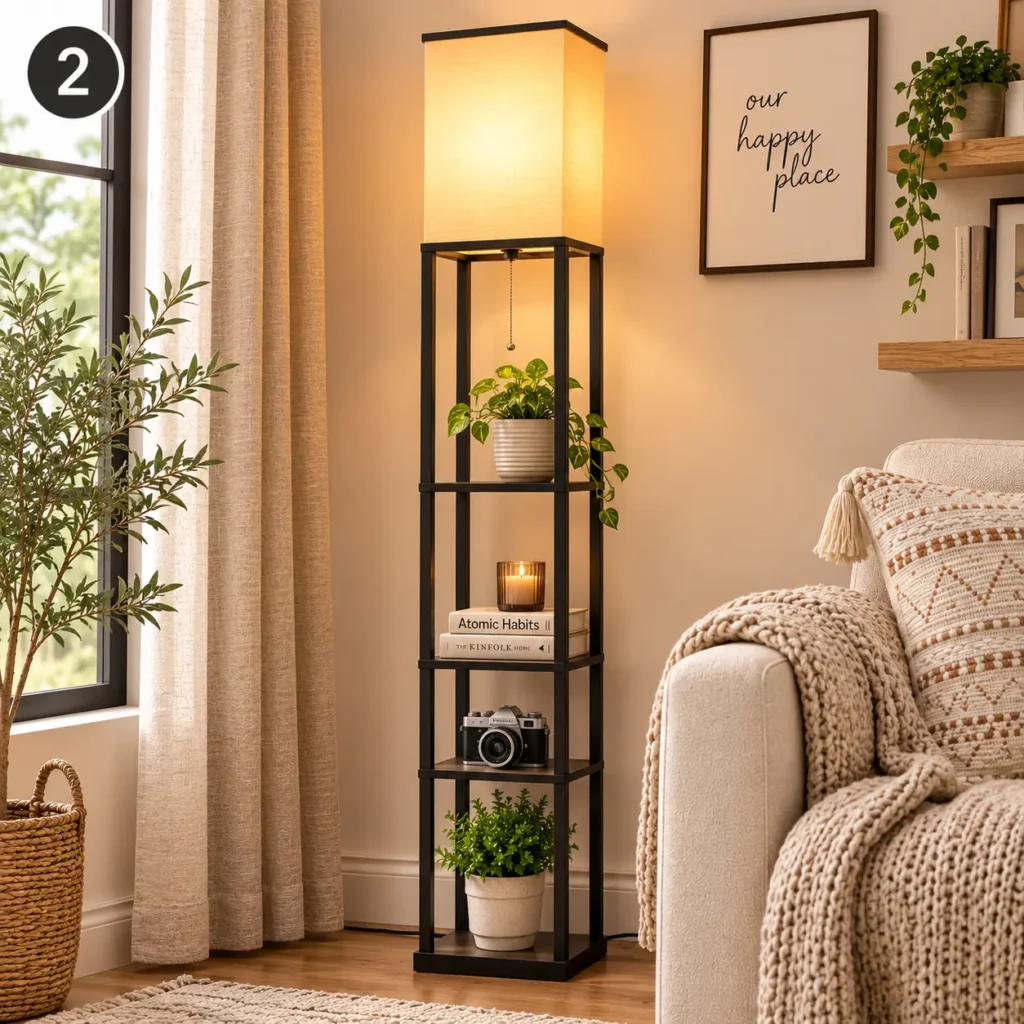
Floor Lamp with Shelves
A space-saving floor lamp that combines warm lighting with built-in shelves for books, plants, and small decor.
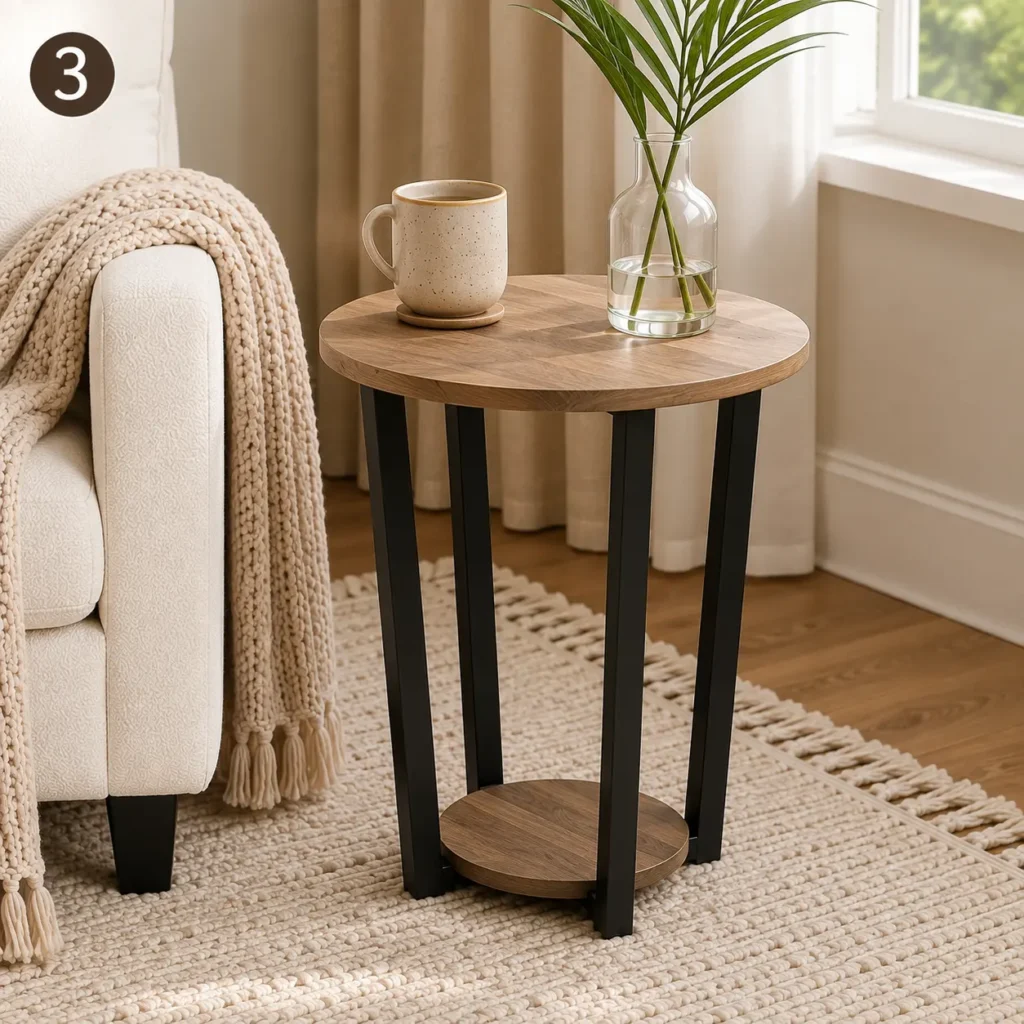
2-Tier Round Side Table
A compact two-tier side table that gives your reading corner an easy place for a coffee cup, book, or small lamp.
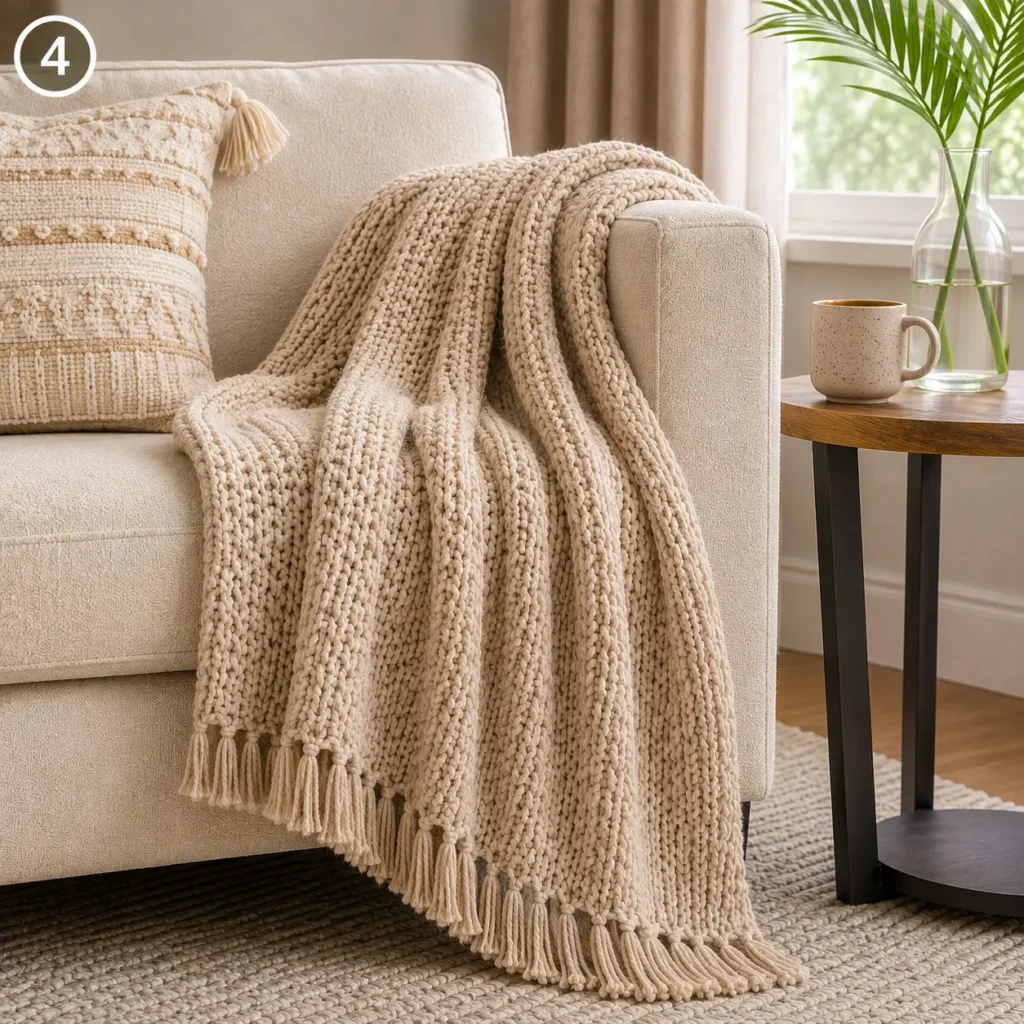
Knit Throw Blanket
A soft cotton knit blanket that adds warmth and layered texture while making the chair feel extra cozy.
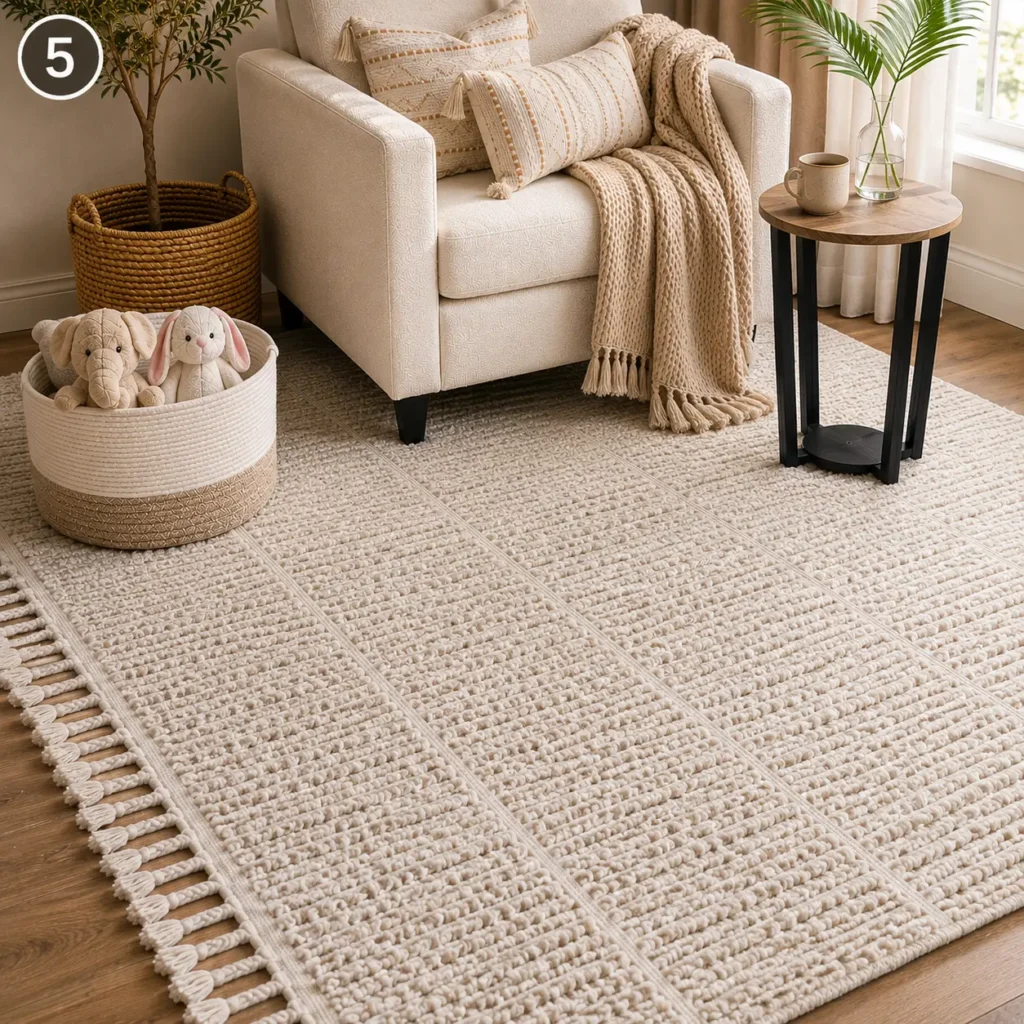
Neutral Textured Area Rug
A soft neutral rug that anchors the reading corner and adds warmth and subtle texture beneath the chair.
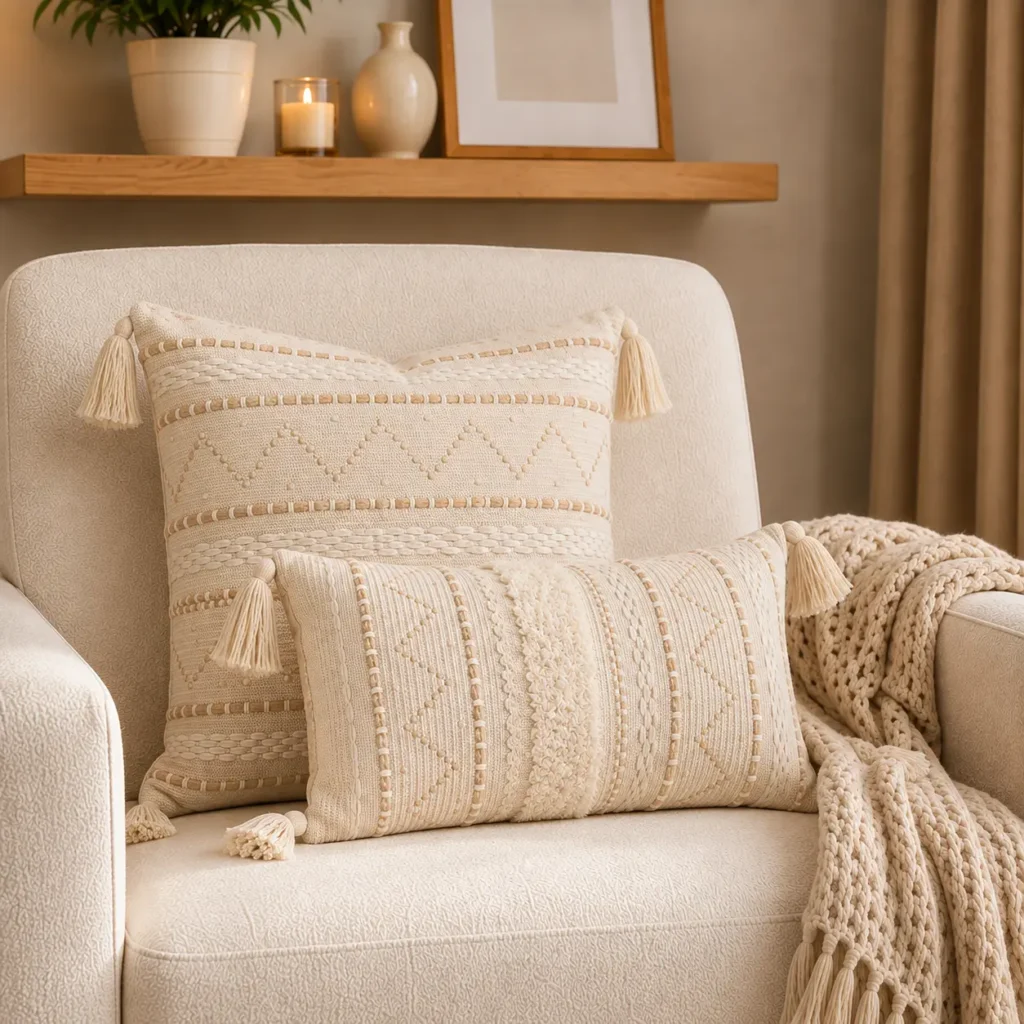
Neutral Lumbar Pillow Cover
A textured neutral pillow cover with subtle woven details that adds comfort and a layered look to the chair.
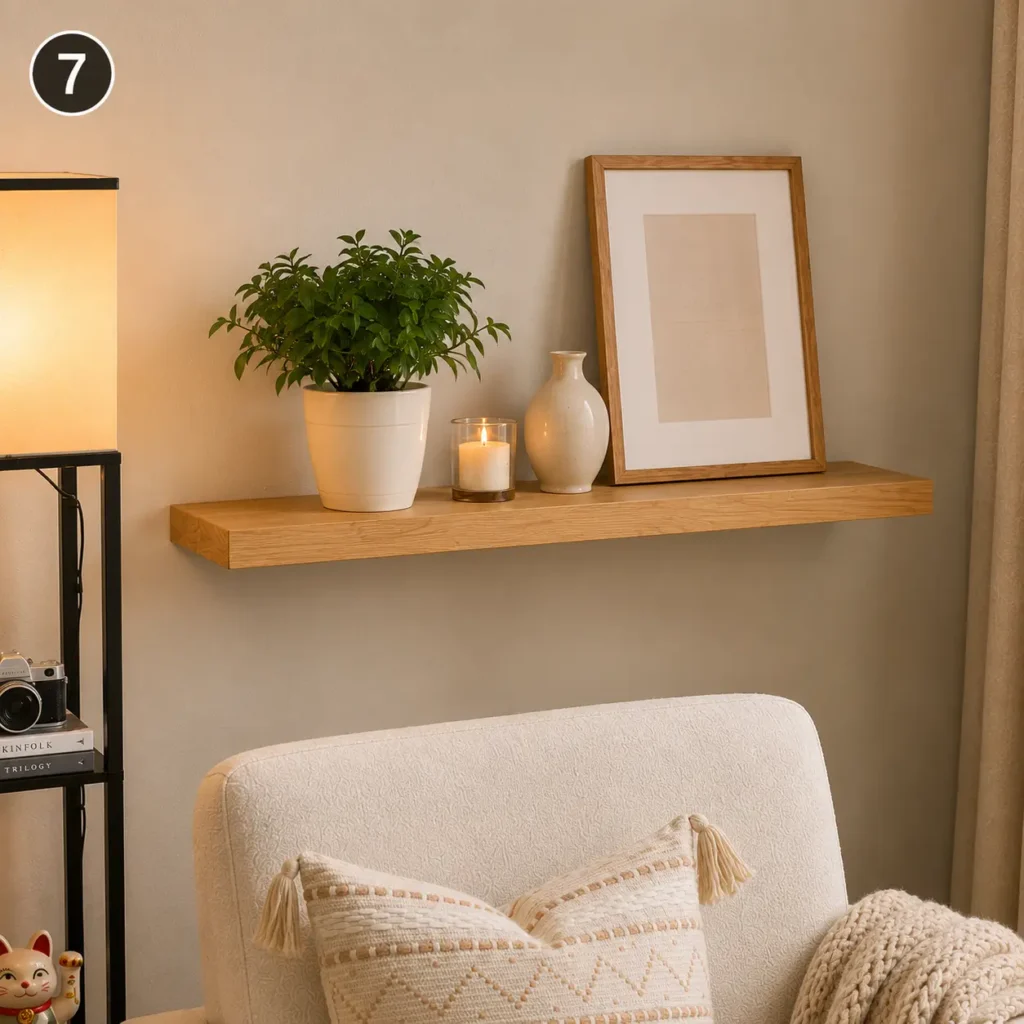
Natural Pine Floating Shelves
Solid-pine floating shelves that provide a simple way to display books, plants, candles, and personal touches.
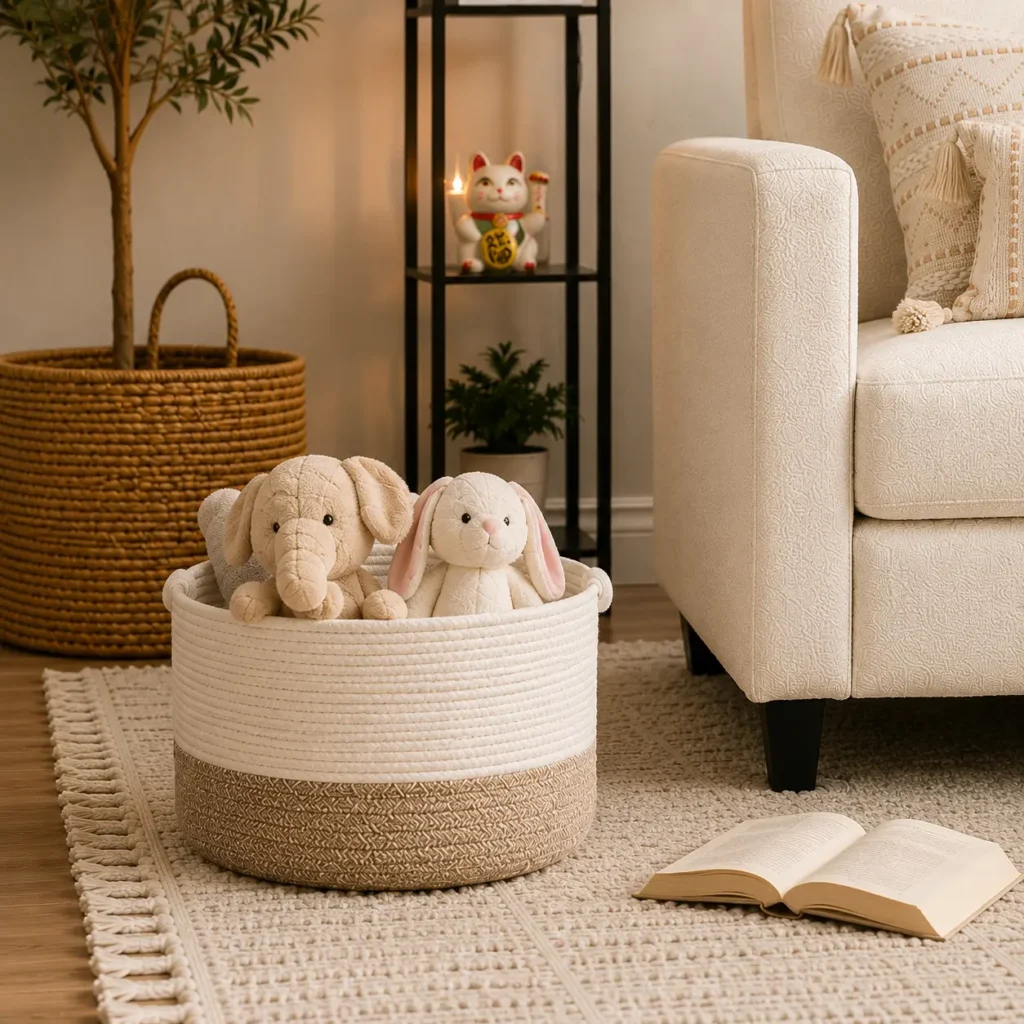
Woven Storage Basket
A spacious two-tone woven basket that keeps blankets, books, toys, or reading essentials neatly tucked away.
Want more Cozy Home Finds?
Explore more furniture and decor pieces
curated by LifeFlow Decor.
Disclosure: As an Amazon Associate, I earn from qualifying purchases.
Frequently Asked Questions About Cozy Reading Corners
Start with a comfortable chair, a small side table, and warm lighting. Add a soft throw, a cushion, and a few personal details such as books or a plant. Keeping the furniture compact and the styling simple helps the space feel cozy without becoming crowded.
A compact armchair or accent chair with comfortable cushioning works well for most small spaces. Choose a chair that provides enough support for longer reading sessions without taking up too much floor space.
A reading corner can fit beside a window, in an unused living-room corner, next to a sofa, or in a quiet bedroom area. Look for a space with natural light and enough room to move comfortably around the chair.
Keep the essentials limited to a comfortable chair, one small table, suitable lighting, and a few soft textiles. Use a basket or small storage piece for books and blankets so everyday items stay organized.
Warm, soft lighting works especially well for a reading corner. A floor lamp, table lamp, or adjustable reading light can provide focused illumination while maintaining a relaxing atmosphere. Natural light from a nearby window is also ideal during the day.
Yes. Even a narrow corner can become a comfortable reading spot with a slim chair, compact side table, and wall-mounted or vertical storage. Using furniture with a small footprint helps preserve valuable floor space.
A small side table is usually enough for a book, coffee or tea, and a reading lamp. A nearby basket can hold extra blankets or books while keeping the area neat.
Use warm ambient lighting, soft textiles, comfortable cushions, and a quiet background atmosphere. A subtle scent and low-volume background sound can also make the space feel more relaxing without adding visual clutter.